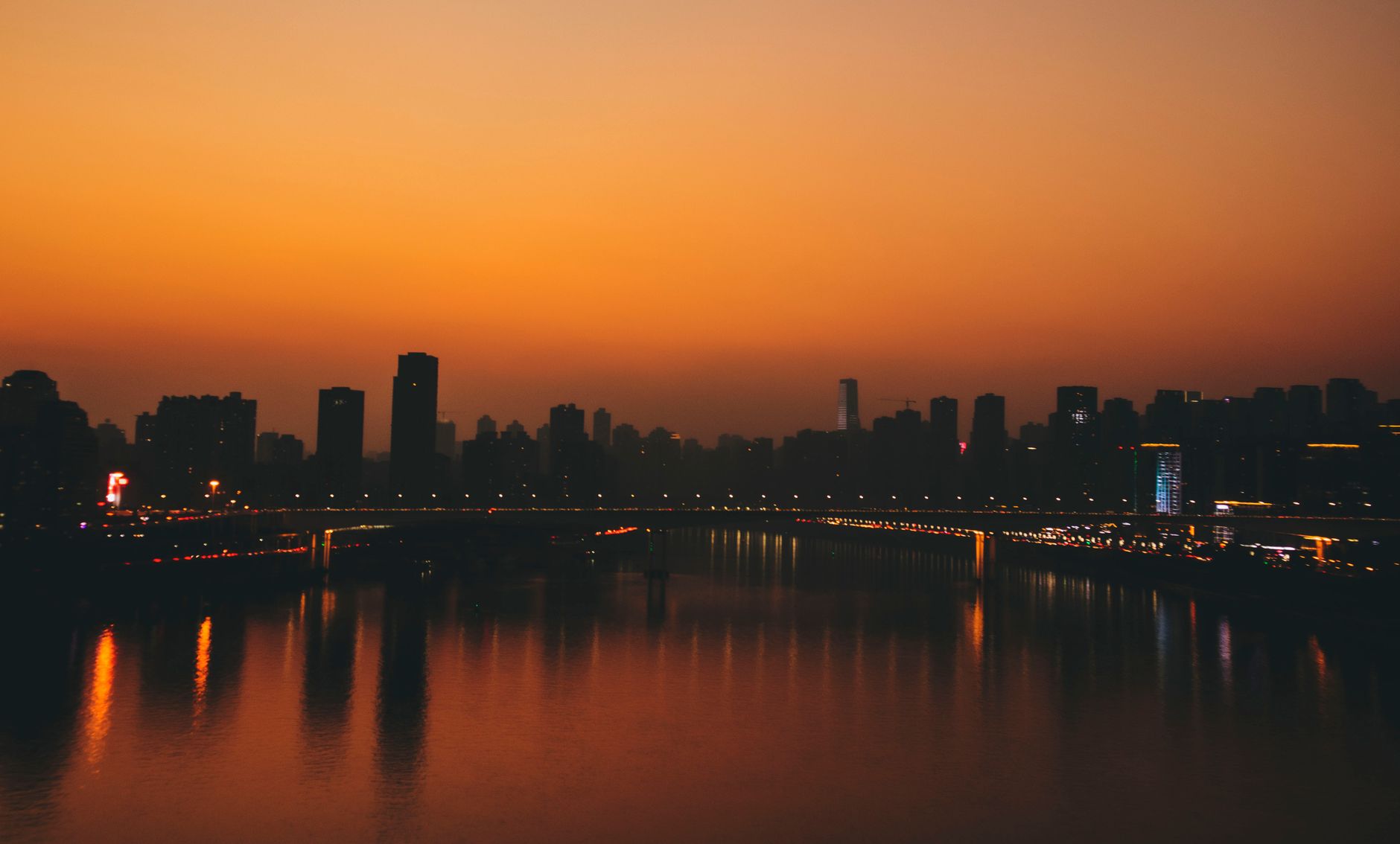

Pittsburgh's best sunset spots don't require a car, a trail map, or a reservation. What they require is knowing where to stand. The city's hills, river valleys, and ridge lines create viewing angles that few flat-grid cities can match, and on a clear evening the sky above the Point or the Monongahela corridor turns colors that stop foot traffic cold. These are the spots worth knowing.
Why Pittsburgh sunsets hit differently
Elevation is the short answer. The city's neighborhoods climb from roughly 710 feet at river level to more than 1,300 feet on the South Hills ridges, and that vertical range means the setting sun catches both the skyline below and the viewer above at the same time. The rivers double the effect. Three river corridors reflect light back upward, giving Pittsburgh's golden hour a warm, amplified quality that flat-grid cities simply can't replicate.
Industrial haze once obscured it. The steel era's air quality wasn't exactly sunset-friendly. But Pittsburgh's skies have been measurably cleaner since the 1980s, and what's left is one of the most underappreciated atmospheric canvases in any American city.
The top spots, ranked by accessibility
Mount Washington is the obvious start. The observation decks above the Monongahela Incline sit at roughly 367 feet above the rivers, and the westward view from Grandview Avenue frames the entire downtown triangle between the Allegheny and Monongahela. Arrive 20 minutes before sunset and you'll have company. Arrive 5 minutes before and you'll fight for a railing spot.
West End Overlook is better on most evenings, and fewer people know it. Located in Elliott, the overlook faces almost due west, which means the sun drops straight into the center of the view rather than off to one side. The Pittsburgh skyline sits in the middle distance, and the Ohio River curves out behind it. Parking is free. It's one of the city's most photogenic public spaces and it's rarely crowded.
Point State Park puts you at water level rather than above it, which changes the experience entirely. The fountain plaza faces directly into the confluence of the three rivers, and on summer evenings the light bounces between all three water surfaces at once. It's worth pairing with a walk along the Riverlife-restored waterfront trail before the sun drops.
Schenley Park's Flagstaff Hill offers something different: a wide, open meadow facing southwest, with no buildings obstructing the horizon line. The hill is used for outdoor movie screenings in summer, but on a quiet weeknight it's an underused urban lawn with a surprisingly clean sightline toward the Oakland skyline. From there, the Carnegie museums and the Cathedral of Learning catch the last light in a way that makes the neighborhood look like a postcard.
Frick Park's Firelane trails give you a wooded approach that suddenly opens onto ridge views above Squirrel Hill and Regent Square. The light comes through the tree canopy first before breaking over the valley below. It's less dramatic than Grandview but more intimate, and the walk itself earns the view.
The overlooked options
Most people skip Emerald View Park, which sits on the ridge above Mount Washington and connects several viewpoints along a surprisingly well-maintained trail system. The park covers 249 acres and includes a handful of clearings that look directly across the South Side flats toward Downtown. It sees a fraction of the foot traffic that Grandview Avenue does.
The Allegheny Observatory in Riverview Park doesn't open its grounds for casual visitors every evening, but the ridge it sits on has public access. The hilltop clearing above the North Side gives a northwestern view that most Pittsburgh residents have never tried, looking out past the Ohio River toward Neville Island as the sun sets behind it.
For something truly off the beaten path: the stairways of Pittsburgh's steepest streets often terminate at small street-end landings with unobstructed western views. Pittsburgh's public stairways are one of the city's most overlooked public assets, and several of them in the South Side Slopes end at viewpoints that rival anything on Grandview at a fraction of the foot traffic.
Timing and conditions
Pittsburgh's best sunsets cluster in late October through early December. Lower sun angles combined with the city's post-summer air clarity produce the most saturated colors. Spring evenings in April and May run a close second, especially after rain clears the air.
Cloud cover is not the enemy here. Partial cloud cover, specifically a mix of high cirrus and mid-level cumulus, produces the most dramatic light. A perfectly clear sky tends to give a clean gradient but no fire. A heavily overcast sky blocks the show entirely. The sweet spot is 30 to 60 percent cloud cover.
The elevation difference between Pittsburgh's neighborhoods also affects timing. Sunset from West End Overlook occurs about 4 minutes earlier in terms of visible horizon contact than it does from Point State Park, because the western ridge drops the sun from the observer's view before it actually sets. Plan accordingly and arrive early, especially at lower elevations.
What to bring
The practical stuff: the Grandview Avenue overlooks have no cover, and the temperature drops fast on the ridge once the sun is gone. In October, a jacket that felt unnecessary at 5 p.m. is essential by 6:30. West End Overlook has a small parking area but no restrooms. Frick Park and Schenley Park both have water fountains active through October.
A phone camera handles most Pittsburgh sunsets well, but if you're shooting from Grandview or West End, a small tripod improves the results significantly once the light gets low. The ambient light from the city's skyline starts to read about 15 minutes after the sun drops, and that window, when the sky still holds color and the city lights are just coming on, is the one worth waiting for.
Pittsburgh doesn't need much help putting on a show. It just needs you to show up at the right spot.