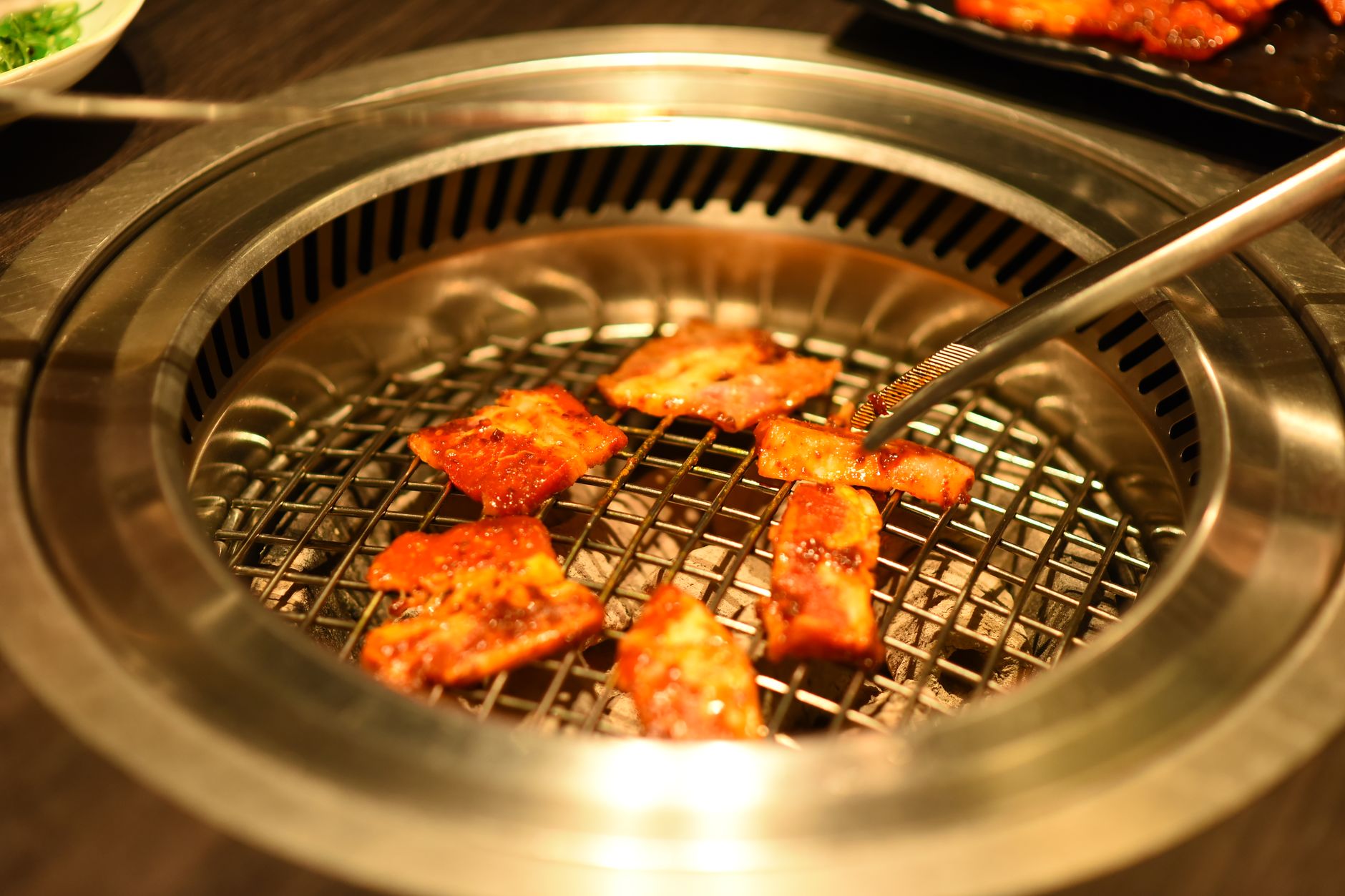

Korean BBQ has a foothold in Pittsburgh that's easy to overlook. The city doesn't have the dense Korean-American enclaves you'd find in New York or Los Angeles, but the spots that do exist here take the food seriously. If you know where to go, Pittsburgh delivers the full experience: tabletop grills, banchan spread across every inch of the table, and meat that arrives raw so you control exactly how it cooks.
The core of the experience
Korean BBQ isn't just a meal. It's a format. You sit at a table with a built-in grill, order cuts of meat, and cook them yourself over charcoal or gas. Most restaurants bring banchan automatically: small dishes of kimchi, pickled vegetables, seasoned spinach, and fish cake that come before anything else and get refilled for free. The rhythm is unhurried. A good Korean BBQ dinner runs two hours without feeling long.
First-timers should start with samgyeopsal (thick-cut pork belly) and bulgogi (thinly sliced marinated beef). Both are forgiving on the grill and give you a clear sense of what the kitchen does well. Wrap the cooked meat in perilla leaves or lettuce with a dab of doenjang paste and a sliver of raw garlic. That combination is the standard for a reason.
Where to go in Pittsburgh
Nakwon Restaurant in Oakland is the anchor of Pittsburgh's Korean dining scene. It's been open for years and draws a loyal crowd of Korean students from Carnegie Mellon and Pitt, which is always a good sign. Nakwon doesn't do tableside grilling, but its BBQ plates and bibimbap are executed cleanly, and the banchan is generous. It's the right starting point for anyone new to Korean food in the city.
Soju in Squirrel Hill leans more modern. The menu borrows from Korean-American fusion without abandoning the fundamentals, and the bar program centers on soju cocktails done with more care than you'd expect. It's busier on weekends, so arrive early or expect a wait.
For true tabletop grilling, Korea Garden in the Strip District is the spot most Pittsburgh regulars point to. The ventilation hoods over each table pull smoke up efficiently, the charcoal option is available on request, and the galbi (short ribs) here justify the trip on their own. The Strip District location means it fits naturally into a Saturday that already includes the produce markets and specialty shops nearby. If you've been exploring the Strip District's full spread of food vendors and restaurants, Korea Garden is worth adding to the itinerary.
What to order beyond the obvious
Most people stick to pork belly and bulgogi their first visit. Both are excellent. But the menu has more to offer.
- Chadolbaegi: thinly shaved beef brisket that cooks in seconds on a hot grill. Mild in flavor, great with sesame oil and salt.
- Jumulleok: beef rib-eye with a sesame marinade, less sweet than bulgogi, more savory.
- Haemul pajeon: a scallion and seafood pancake, crispy on the outside and dense inside. Order it as a starter while you wait for the grill to heat up.
The dipping sauces matter more than beginners realize. Sesame oil with salt and pepper is the standard for unmarinated cuts. Ssamjang, a thick paste of fermented soybean and chili, goes into the lettuce wraps. Don't skip either.
Pairing drinks with Korean BBQ
Soju is the obvious choice and it works. It's mild enough not to compete with the food, and splitting a bottle at the table fits the communal pace of the meal. Hite or OB beer, both Korean lagers, are on the menu at most Pittsburgh spots and pair well with anything from the grill. If you're somewhere with a cocktail menu, a yuzu-forward drink cuts through the fat of pork belly cleanly.
Pittsburgh's bar scene has grown comfortable with Korean and East Asian flavors in recent years. The craft cocktail influence that spread through neighborhoods like Lawrenceville and Squirrel Hill created space for more adventurous drink menus. Places building out thoughtful cocktail lists have started incorporating ingredients like gochujang and yuzu that complement Korean food naturally.
A few practical notes
Reservations matter on weekends. Korea Garden and Soju both fill up by 7 p.m. on Fridays and Saturdays. Call ahead or use whatever reservation system they're running. Weeknights are easier and often more relaxed.
Bring more people than you think you need. Korean BBQ scales well with group size. Four to six people means you can order a wider range of cuts without over-committing to any one thing. Two people works fine, but you'll eat the same two dishes all night.
Dress for smoke. Even with good ventilation, your jacket will smell like galbi on the way home. That's not a complaint. It's just useful to know.
Pittsburgh's Korean BBQ scene is smaller than its appetite for the food deserves. But the restaurants doing it here are doing it well, and the city's food culture has proven it can sustain niche cuisines when the quality is there. Korea Garden's charcoal grills and Nakwon's steady banchan game are proof enough. Show up hungry.