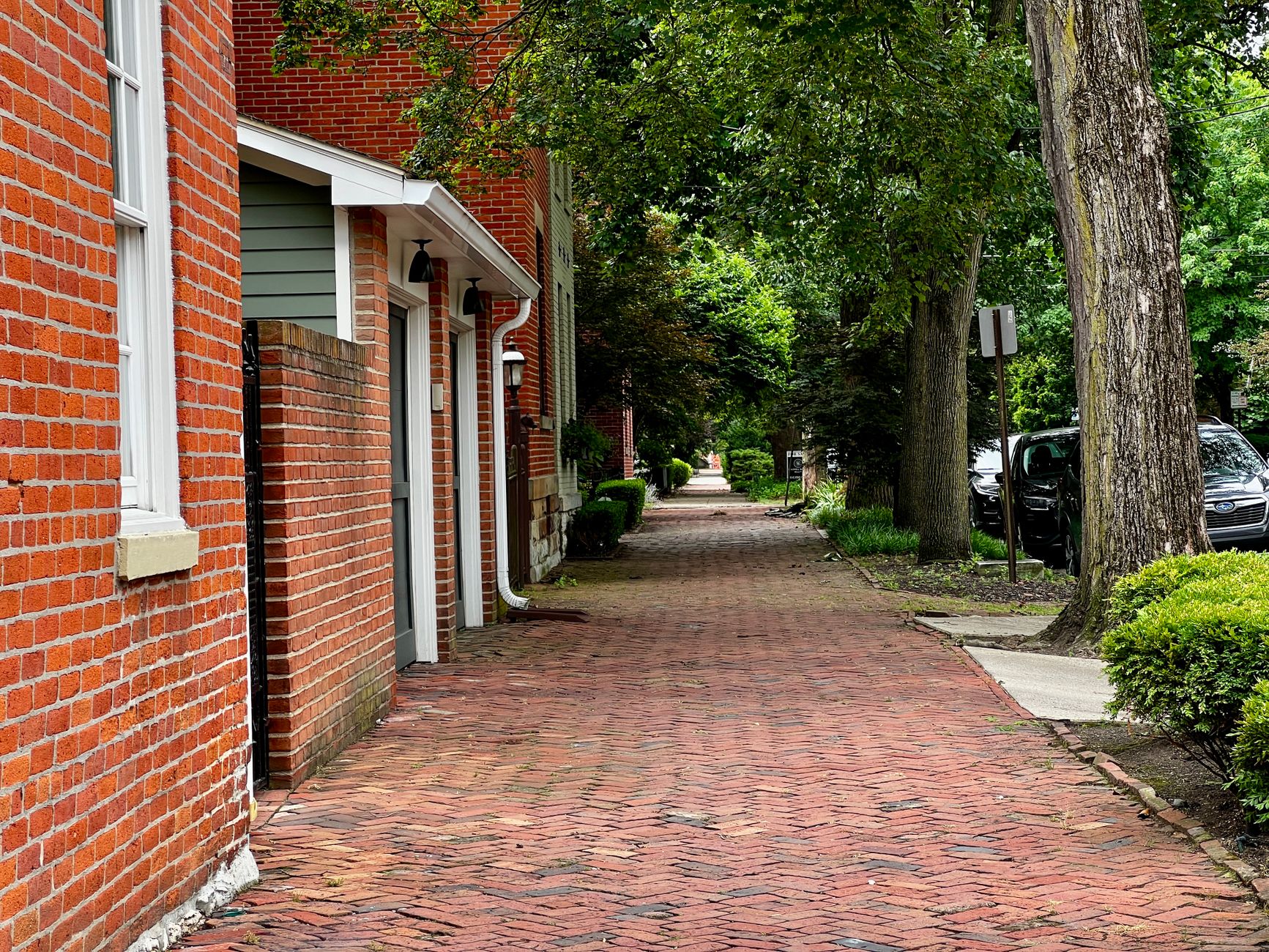

Morningside doesn't show up on most people's Pittsburgh neighborhood shortlists. It sits above Highland Park on the city's East End, tucked between Stanton Heights to the north and Lincoln-Lemington to the east, and its boundaries are loose enough that even longtime Pittsburghers sometimes disagree about where exactly it starts. That invisibility is a feature, not a bug, for the roughly 3,700 residents who actually live there.
The neighborhood is residential in the truest sense. No performance venues, no brewpub strips, no design-hotel openings. What Morningside has instead is an unusually intact stock of early 20th-century brick rowhouses, a walkable commercial stretch along Jancey Street, and a community that's been stable for decades without being sealed off from change.
What the streets actually look like
Morningside's housing stock is its most immediately striking quality. The neighborhood developed primarily between 1910 and 1935, and Pittsburgh's brick-first building culture means most of those homes are still standing and still occupied. Lots are narrow, porches are deep, and the blocks feel proportioned for walking rather than driving, even though most households have a car.
The elevation drops sharply toward Highland Park Avenue on one side and rises into the hillside toward Stanton Heights on the other. The terrain gives many Morningside homes views across the valley below, the kind of sightlines that cost a premium in neighborhoods with more name recognition. Pittsburgh's hills shape where you live in ways that go well beyond the view, as anyone who's compared commute times from a ridgeline block to a valley floor will tell you. A deeper look at Pittsburgh's neighborhoods by elevation makes clear how much geography still drives housing value across the city.
Jancey Street is the neighborhood's commercial spine. It's short, roughly 6 blocks of substantive retail, and it punches appropriately for its size: a hardware store, a diner, a barbershop, a laundromat, a corner market. None of it is destination dining or boutique retail. It's a neighborhood street that serves the neighborhood, which is rarer than it sounds in 2026.
Who lives in Morningside and why they stay
The neighborhood skews toward longtime owners and their adult children. Turnover is low by Pittsburgh standards. Houses that come on the market tend to sell quickly, often to buyers who already know someone on the block, because word gets around before a listing goes live.
That stability has kept Morningside from following the cycle that reshaped Lawrenceville and parts of Bloomfield: sharp rent increases, displacement of long-term residents, and a rapid pivot to a younger, higher-income demographic. Morningside hasn't been immune to rising assessed values, but the change has been slower and more incremental, and owner-occupancy rates have stayed high enough to buffer the worst of it.
Families with kids are a significant part of the mix. The neighborhood feeds into Pittsburgh Public Schools, and proximity to Highland Park, which sits right at Morningside's southern edge, gives younger residents easy access to one of the city's better maintained green spaces without crossing a major arterial.
Getting around from Morningside
Morningside's transit coverage is functional rather than excellent. Port Authority bus routes connect the neighborhood to Oakland and Downtown, but frequency is lower than on the main corridors. Driving is how most residents handle anything time-sensitive, and street parking is generally available, which puts Morningside ahead of Shadyside and Squirrel Hill on that particular frustration scale.
The neighborhood's location makes it genuinely convenient to the rest of the East End. Highland Park Avenue runs south into Penn Avenue and from there into East Liberty in under 10 minutes. Stanton Avenue provides a direct shot toward Fox Chapel Road for residents who work in the northeastern suburbs. And the Allegheny Cemetery's perimeter road serves as an informal connector for cyclists who want to avoid the main arterials entirely.
For residents committed to car-free living, it takes more effort than in Oakland or Friendship, but it's workable. Pittsburgh's car-free commute options have improved across the East End in recent years, though the specifics matter enormously depending on your destination. Anyone making the calculation before a move should read through Pittsburgh's car-free commute guide before signing a lease.
What Morningside neighbors are building
The neighborhood has a small but active civic infrastructure. The Morningside Community Organization runs cleanup days, coordinates with the city on zoning and development questions, and hosts the kind of low-key block events that build the social fabric that glossier neighborhoods often try to manufacture with pop-ups and festivals.
There's a community garden on a reclaimed lot on Morningside Avenue that's been running for over a decade. It's nothing elaborate: raised beds, a tool shed, a composting setup. But it draws a cross-section of the neighborhood's residents in a way that few spaces manage, and it's stayed solvent because the people using it take ownership seriously. Pittsburgh's tool libraries have helped community garden organizers across the city cut costs on shared equipment, and Morningside's garden has benefited from exactly that kind of shared-resource thinking.
There's also real energy around the neighborhood's housing stock. Several younger buyers have taken on rowhouse renovation projects in Morningside over the past few years, drawn by prices that are still below what comparable square footage costs in Highland Park or Point Breeze. That investment is mostly quiet and owner-driven rather than developer-led, which is a meaningful distinction for a neighborhood that's watched its neighbors absorb outside capital with mixed results.
The case for paying attention now
Morningside is not undiscovered. The people who live there know exactly what they have. But it remains underrated in the broader Pittsburgh conversation, underrepresented in the neighborhood guides, and underpriced relative to its amenities and location.
Proximity to Highland Park's 380-acre green space, a walkable commercial street, a stable and engaged community, and housing stock that hasn't been stripped of its character: those are real assets. The question is how long a neighborhood this well-positioned stays off the radar. Based on what's happened to Friendship, Greenfield, and Polish Hill over the past decade, the answer is probably: not much longer.
For now, Morningside rewards the people who are paying attention.