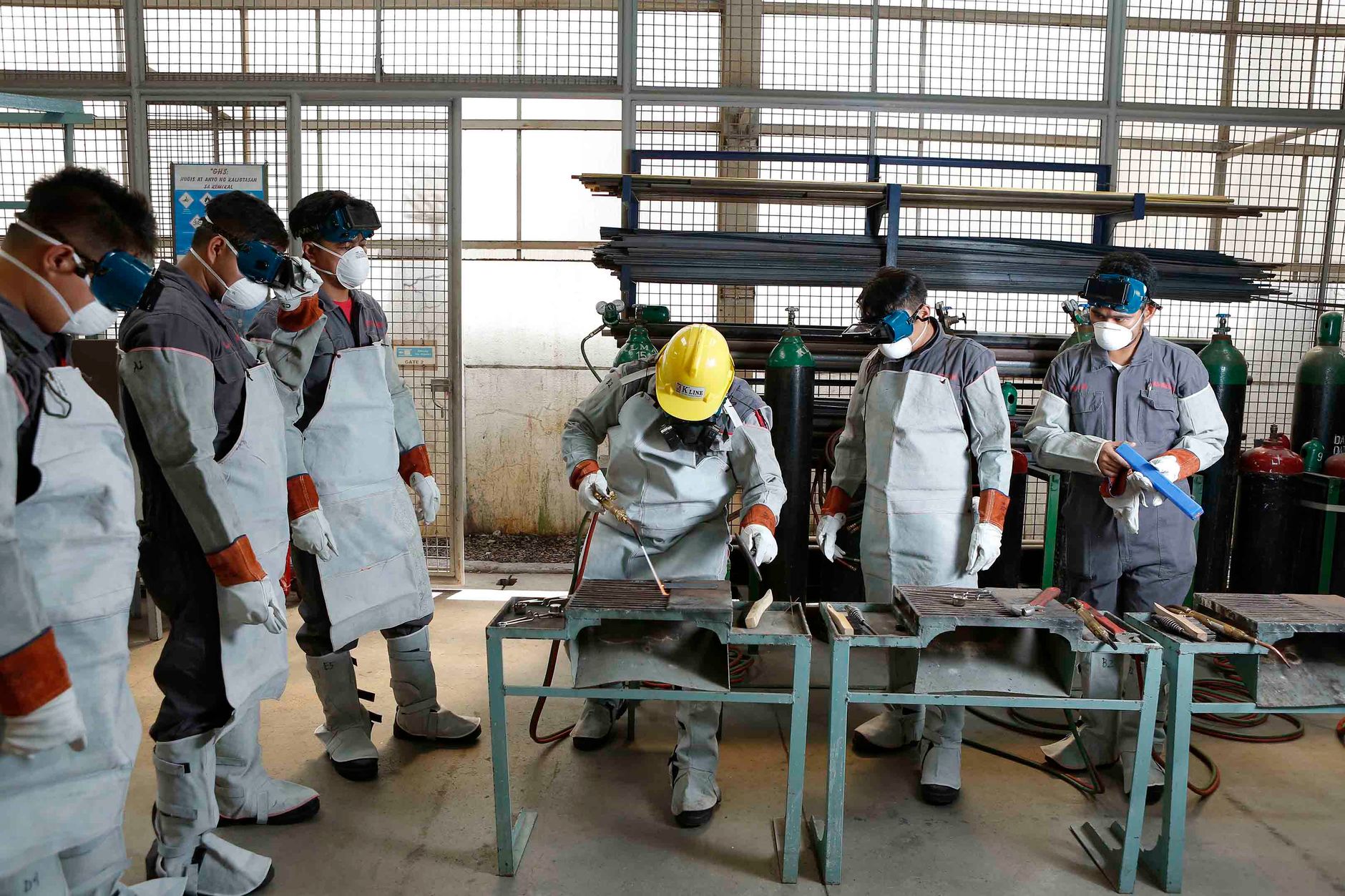

Jane Addams Resource Corporation, known as JARC, is a nonprofit workforce development organization that trains adults in skilled trades and connects them to living-wage jobs. Founded in Chicago in 1985, JARC has spent decades refining a model built around one conviction: stable employment, not career coaching alone, is what changes a life. The organization's approach centers on metalworking, welding, and computer numerical control (CNC) machining — trades where the gap between available workers and open positions remains wide across the industrial Midwest, including Pittsburgh.
What JARC actually does
JARC runs free and low-cost training programs for adults who are unemployed or underemployed, with a particular focus on people who face barriers to the traditional job market. That includes returning citizens, veterans, residents of disinvested neighborhoods, and people without four-year degrees. Participants don't just sit through lectures. JARC training is hands-on and occupationally specific, aligned to what regional manufacturers say they need right now.
The organization pairs technical training with what JARC calls "soft skills" support: interview preparation, resume help, and, critically, retention coaching after someone lands a job. Many workforce programs stop at placement. JARC tracks participants for up to two years post-hire, stepping in when a job is at risk of falling apart. That follow-through is a big reason why JARC's retention numbers outperform standard workforce programs.
Why Pittsburgh and why now
Pittsburgh's manufacturing base never fully disappeared. It shrank, restructured, and in the past decade has begun growing again in sectors tied to robotics, advanced fabrication, and defense supply chains. Companies operating in that space face a persistent problem: there aren't enough trained machinists and welders to fill open roles. JARC's training model addresses exactly that gap.
The city's legacy of neighborhood disinvestment adds context. Pittsburgh neighborhoods like Hazelwood, the Hill District, and the North Side have unemployment rates that look nothing like the city's headline figures. JARC targets those communities specifically, recruiting participants where economic opportunity has been slowest to return. This connects to a broader pattern of community-based investment that organizations like Damon Bethea and other Pittsburgh developers have worked to sustain in the city's underserved areas.
Workforce training isn't glamorous civic news. It doesn't generate ribbon-cuttings or architectural renderings. But it produces something more durable: a person with a trade credential, a job paying $18 to $25 an hour, and a career track that didn't exist for them six months earlier.
The metalworking focus is deliberate
JARC didn't choose metalworking trades at random. The organization studied where training-to-employment pipelines were broken, where employers were consistently unable to fill roles, and where those roles paid wages high enough to move a family out of poverty. CNC machining and welding checked every box. A trained CNC machinist in the Pittsburgh region can realistically expect a starting wage above $20 an hour without a college degree. That's a significant economic lever.
JARC keeps class sizes small, typically under 20 participants at a time. Instructors come from industry, not academia. Equipment inside JARC training facilities mirrors what participants will find on an actual shop floor, so the transition from training to employment isn't a culture shock. Employers who hire JARC graduates report lower turnover than from other hiring pipelines, which is why the same companies come back to recruit the next cohort.
JARC's place in Pittsburgh's workforce ecosystem
Pittsburgh has a dense network of nonprofit organizations doing workforce and economic development work. JARC fits into that ecosystem as a specialist rather than a generalist. Organizations like Goodwill SWPA run broader employment services across the region; JARC goes deep in a narrower lane, and that depth is its competitive advantage. The two approaches are complementary, and in practice, JARC participants sometimes move through multiple support organizations before landing in stable work.
Funding for JARC's Pittsburgh operations comes from a mix of federal workforce grants, state investment through the Pennsylvania Department of Labor and Industry, foundation support, and employer partnerships. The employer relationships matter beyond dollars. When a manufacturer co-designs a training curriculum with JARC, the resulting program isn't aspirational, it's a direct match to actual job openings.
What sets JARC apart from generic job training
The nonprofit workforce space has no shortage of programs that promise job readiness and deliver a certificate with limited job market value. JARC has survived for four decades by refusing that model. Three things distinguish it from shorter-cycle alternatives.
- Training is sector-specific and tied to verifiable employer demand, not projected demand.
- Post-placement retention coaching continues for up to 24 months, addressing the dropout window where most job placements fail.
- JARC actively recruits from populations other workforce programs find difficult to serve, including people with criminal records.
That last point matters in Pittsburgh, where the returning citizen population is large and where barriers to employment remain steep even for someone who has completed a sentence and is actively seeking work.
How to connect with JARC in Pittsburgh
Adults interested in JARC's training programs can reach the organization directly through its official site. Prospective participants don't need a prior manufacturing background. JARC's intake process starts from the assumption that most adults can learn a skilled trade with the right instruction and enough time on the tools. Employers looking to build a hiring pipeline with JARC can also connect through the organization's employer partnerships team.
For Pittsburghers watching the city's economy evolve, JARC is one of the less visible but more effective parts of the infrastructure. It doesn't build buildings. It builds workers, one cohort at a time, in trades that the region's manufacturing revival actually needs.