
The best things to do in Pittsburgh aren't hard to find once you know where to look. The city runs on layers: a riverfront trail system above an industrial past, mural-covered rowhouse blocks above creek-carved hollows, a museum district that punches far above its weight. Whether you have a weekend or a week, Pittsburgh rewards the curious and punishes the itinerary-heavy. Put the phone down after the first stop and let the neighborhoods do the work.
Get outside: parks, trails, and rivers
Pittsburgh's terrain is its biggest surprise for first-timers. The hills aren't just scenery; they're the actual activity. Frick Park, the city's largest municipal park, covers 644 acres of forested ravines and creek corridors in the East End. The Fern Hollow trail system connects to Panther Hollow and Nine Mile Run, giving you miles of honest wilderness within city limits. Wear real shoes.
Point State Park sits at the confluence of the Allegheny, Monongahela, and Ohio rivers, and it's the most geographically dramatic public space in the city. The fountain at the tip is worth the walk alone, but the real payoff is the view back toward Downtown. Go at dusk.
The riverfront trail network is one of Pittsburgh's great infrastructure achievements. You can pedal from the North Shore to Millvale along the Allegheny, or follow the Mon to the Waterfront in Homestead. Rent a bike, or bring your own. The kayaking scene on the three rivers is equally accessible, with put-in spots along all three banks and rental outfitters near the North Shore. You don't need experience to get on the water.
For a shorter outing, Schenley Park in Oakland is 456 acres of rolling hills, wooded paths, and a restored boathouse. It connects directly to Carnegie Mellon University's campus and the Phipps Conservatory, which makes it easy to chain a few hours of green space with a cultural stop.
Eat and drink your way through the neighborhoods
Pittsburgh's food scene has outgrown every cliché attached to it. The Strip District runs on Saturday mornings: produce vendors, fish counters, pierogies from the churchyard, and a dozen different coffee lines before 9 a.m. Come hungry and plan to carry bags.
Lawrenceville is the city's most dynamic dining corridor right now. Butler Street holds everything from serious ramen to natural wine bars to Taiwanese comfort food, often within a few blocks of each other. Bloomfield, just west of Lawrenceville, runs quieter but rewards it. The neighborhood's Italian-American bakeries and Vietnamese sandwich shops sit side by side on Liberty Avenue in a way that doesn't happen by accident.
Squirrel Hill's Forbes and Murray corridor is the closest Pittsburgh gets to a genuine walkable dining main street. Kosher delis, bubble tea shops, Ethiopian restaurants, and dim sum parlors fill the blocks between the two avenues. It's the kind of neighborhood where a single Saturday lunch walk becomes three stops without trying.
For drinks, Pittsburgh's craft cocktail bars have moved well past novelty. Shadyside, South Side, and East Liberty each have at least one bar worth a specific trip, not just a stop on the way home. The speakeasy scene (hidden doors, no signs, reservation-only rooms) is real and growing. Ask a local, because that's still the only reliable way to get in.
Culture, art, and music
Carnegie Museums of Pittsburgh operates four institutions within a short walk of each other in Oakland: the Museum of Natural History, the Museum of Art, Carnegie Science Center (on the North Shore), and the Andy Warhol Museum, also on the North Shore. The Warhol alone is worth the trip. It's the largest museum in the United States dedicated to a single artist, and the permanent collection is deeper than the gift shop crowd suggests.
Pittsburgh's public art scene is spread across the whole city, not concentrated in a gallery district. Lawrenceville has the highest density of outdoor murals, particularly along Butler Street and the side streets feeding off it. The lettering and mosaic work visible from the sidewalk in that neighborhood represents some of the most serious craft being made in Pittsburgh right now.
For live music, Bossa Nova Civic Club in Garfield has become the beating heart of Pittsburgh's independent music scene, booking artists that bigger rooms overlook. City Theatre on the South Side stages contemporary work that earns national attention. The Pittsburgh Symphony Orchestra performs at Heinz Hall Downtown; tickets are more affordable than most comparable ensembles in larger cities.
Phantom of the Attic, the comic book and pop culture shop in Oakland, has been a cultural cornerstone for decades. It's not just a shop; it's a community gathering point. Worth an hour even if you don't collect.
Viewpoints and landmarks
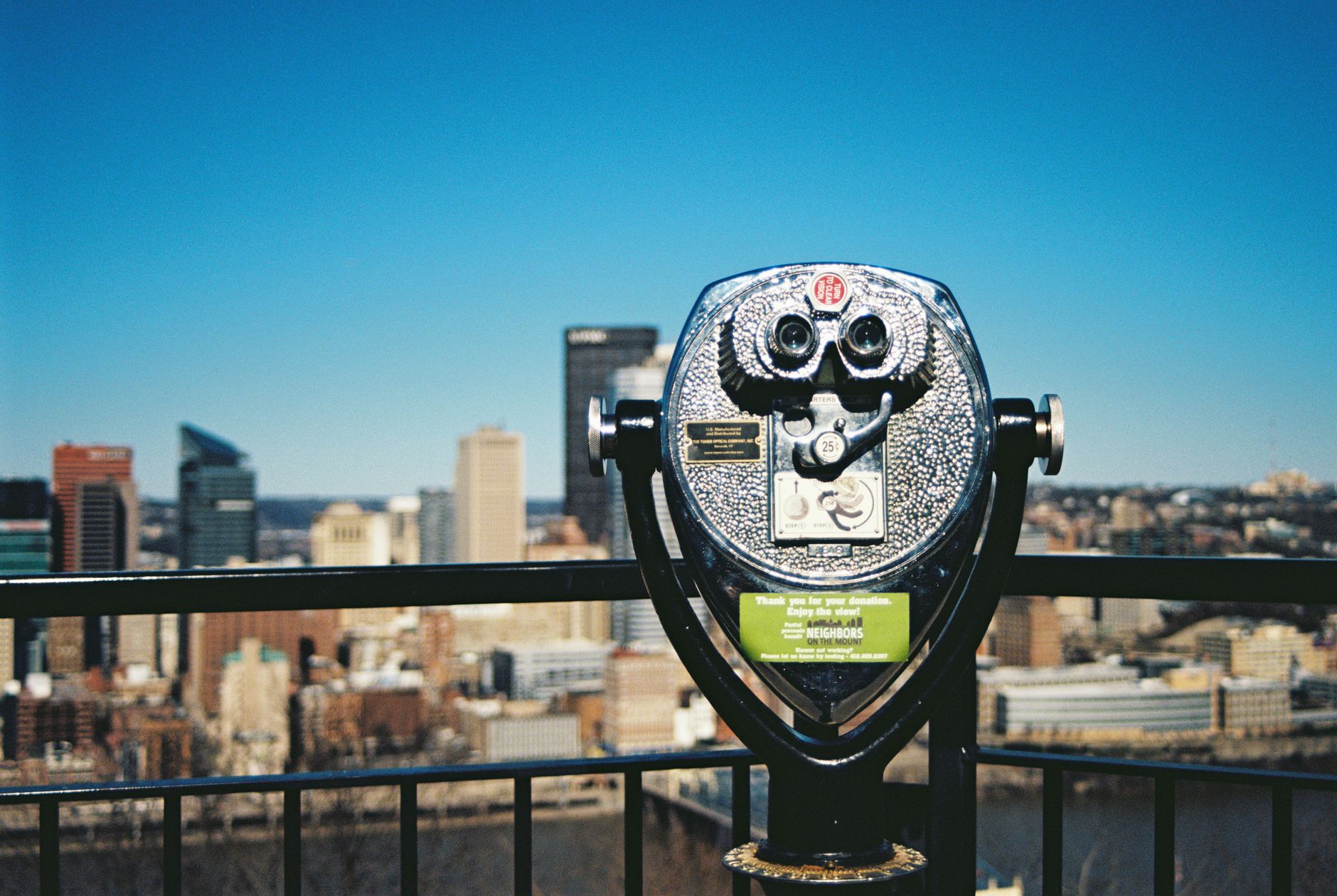
Pittsburgh's topography creates viewpoints that flat cities can't manufacture. The Duquesne Incline and the Monongahela Incline both run up Mount Washington from the South Side, and both are operational historic cable cars. The observation deck at the top of the Mon Incline delivers the skyline view that ends up on every Pittsburgh postcard. Sunrise is spectacular; golden hour is better.
Grandview Avenue along the top of Mount Washington offers a mile of overlook restaurants and benches facing the Golden Triangle. It's free. You don't have to eat at any of them to stand there and look.
Less visited: the river stairs. Pittsburgh has more than a dozen sets of public stairs that descend directly to its three rivers, and almost nobody uses them. Finding one and walking down to the water's edge is a distinctly Pittsburgh experience that doesn't appear in any guidebook.
Day trips and weekend extensions
Frank Lloyd Wright's Fallingwater is 70 miles southeast of Pittsburgh in the Laurel Highlands. It's the most visited private home in the United States, and the tours are worth booking in advance. Kentuck Knob, another Wright house, sits a few miles away and draws smaller crowds. Both make for a full day out of the city.
Ohiopyle State Park, also in the Laurel Highlands, offers white-water rafting on the Youghiogheny River, along with the Ferncliff Peninsula trail loop, which is one of the best short hikes in the state. The drive down takes about 90 minutes from Pittsburgh's East End.
Closer in: the town of Sewickley, 12 miles northwest along the Ohio River, has a genuine main street with independent shops, a few good restaurants, and a walkable scale that Pittsburgh's hillier neighborhoods don't always deliver. It's a good half-day add-on before or after the airport.
Practical notes
Pittsburgh is more walkable within neighborhoods than between them. The hills make cross-city walking harder than a map suggests; the bus network covers most of the city, and ride-share fills in the gaps. A car makes the Laurel Highlands day trips significantly easier but isn't necessary for anything inside city limits. Parking is cheap by East Coast standards, particularly on weekends in Oakland and the Strip District. Don't park on the wrong side during street cleaning. The tickets are real.