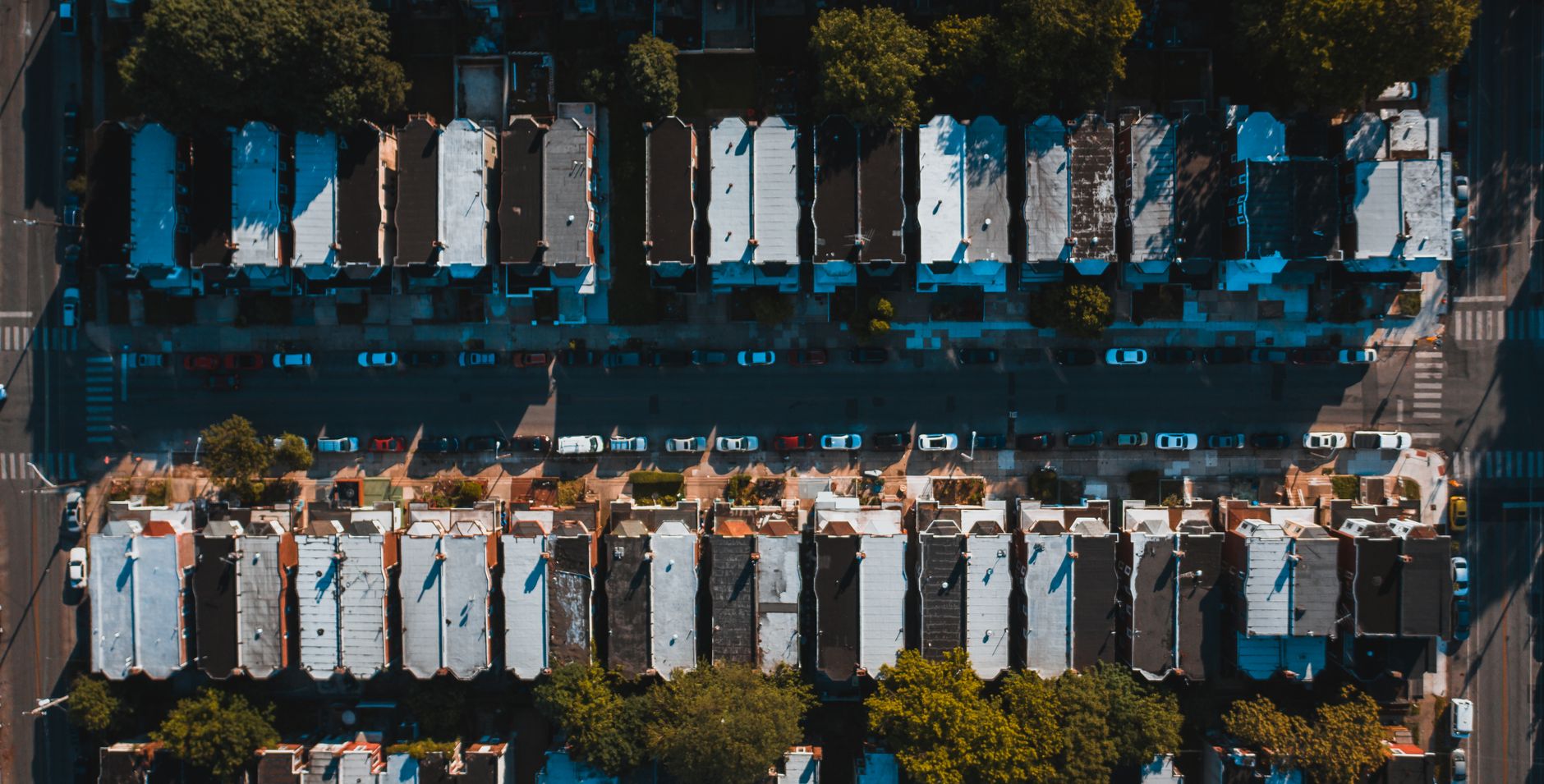

Greenfield doesn't show up on most Pittsburgh neighborhood rankings. It doesn't have a Butler Street corridor or a waterfront amenity to anchor its identity. What it has is something harder to market: a tight-knit residential character, genuine affordability, and a location that puts it within a 10-minute drive of Squirrel Hill, Oakland, and the Hazelwood Green development corridor. People who find it tend to stay.
The neighborhood runs roughly from the Boulevard of the Allies south toward Hazelwood, bordered by Schenley Park to the west and the run of Panther Hollow to the northwest. That geography is not incidental. Greenfield residents get access to trail systems and green corridors that most city dwellers would consider a serious commute. Panther Hollow's trail network begins practically at Greenfield's edge, giving the neighborhood a backyard that it rarely gets credit for.
What makes Greenfield different
The easiest way to describe Greenfield is to say what it isn't. It isn't a neighborhood in the middle of a visible reinvention. It isn't drawing headlines about new mixed-use development or restaurant openings every few months. It's a place where owner-occupied rowhouses line streets with actual sidewalks, where the corner bar has been there for forty years, and where the elementary school anchors community life the way elementary schools used to in American cities.
That stability hasn't kept property values frozen. Greenfield has seen steady appreciation over the past five years as buyers priced out of Squirrel Hill and Shadyside start looking at its rowhouses with fresh eyes. A three-bedroom home that would list above $400,000 in Squirrel Hill proper often appears in Greenfield for $80,000 to $120,000 less. That gap is shrinking, but it hasn't closed.
The neighborhood's commercial strip along Greenfield Avenue is modest by design. You'll find a hardware store, a few bars, a pizza shop, and a diner that fills up on weekend mornings. It's not trying to be a destination. For residents, that's largely the point.
The parks question
Greenfield is one of the better-positioned neighborhoods in the city when it comes to green space access. Schenley Park's 456 acres share a border with the neighborhood's western edge, which means residents can walk into mature forest within a few minutes of their front doors. Schenley Park offers trail running, disc golf, tennis courts, an ice skating rink, and the Phipps Conservatory connection that makes it a destination in every season.
That proximity to parkland without the premium attached to living directly in Squirrel Hill or Oakland is part of what draws young families and outdoor-oriented residents to Greenfield. The neighborhood also feeds into the city's broader stairway network. Pittsburgh's public stairways are often the fastest routes between elevation changes, and Greenfield has its share: steep concrete steps threading between houses that connect lower Greenfield to the ridge streets above. Pittsburgh's public stairways are one of the city's most underappreciated infrastructures, and they're essential here.
Who lives here now
Greenfield's population has historically been working-class and predominantly white, with roots in the mid-century migration patterns that shaped much of Pittsburgh's East End. That demographic picture is shifting. Graduate students priced out of Oakland, young professionals who want walkability without the noise of Lawrenceville, and families stretched thin by Squirrel Hill rents have all found their way here over the past decade.
The Greenfield Organization, the neighborhood's community development corporation, has been active in pushing for infrastructure improvements, tree canopy work, and community programming. It's a small organization with a track record of showing up at zoning hearings and organizing neighborhood cleanups, the kind of institution that doesn't generate press releases but keeps a neighborhood functional.
The local elementary school, Greenfield K-8, has a dual-language Spanish program that draws families from outside the neighborhood's immediate boundaries. That program is one of the more substantive indicators of the neighborhood's direction: it signals a community investing in a specific educational identity rather than simply coasting on existing infrastructure.
Getting around from Greenfield
Greenfield's transit connections are adequate without being exceptional. Several Port Authority bus routes connect the neighborhood to Oakland in under 15 minutes, which puts it squarely in range of the University of Pittsburgh, Carnegie Mellon University, and the hospital complex at UPMC Oakland. The Boulevard of the Allies gives drivers a quick artery into Downtown, typically 10 to 15 minutes off-peak.
Cyclists have a harder time. The neighborhood's internal streets are hilly and mostly without bike infrastructure. The nearby Jail Trail along the Monongahela provides a flat, car-free connection toward Downtown, but reaching it from Greenfield requires navigating a few steep blocks. It's workable, not seamless.
What's worth watching
The Hazelwood Green development, just downhill from Greenfield, is the biggest variable in the neighborhood's near-term future. Hazelwood Green is a 178-acre brownfield redevelopment on the former LTV Steel site along the Monongahela, with plans for tech-focused employers, residential units, and public riverfront access. If even a fraction of those plans materialize at scale, Greenfield sits in a strong position: close enough to benefit from new amenities and employment, far enough uphill to remain distinct from the development's footprint.
The neighborhood's tree canopy is another story worth watching. Like much of Pittsburgh's East End, Greenfield has seen canopy loss over the past two decades, and the replacement planting effort has been uneven. Summer heat is already measurably worse on blocks where mature trees were removed and never replaced.
None of this makes Greenfield a neighborhood on the verge of transformation in the way that phrase usually gets used. It's not about to become Lawrenceville. What it is becoming is a place where the combination of affordability, park access, school quality, and location creates something that's getting harder to find: a Pittsburgh neighborhood that still works for people on ordinary incomes who want an ordinary, well-functioning urban life.
That's worth paying attention to before the window closes.