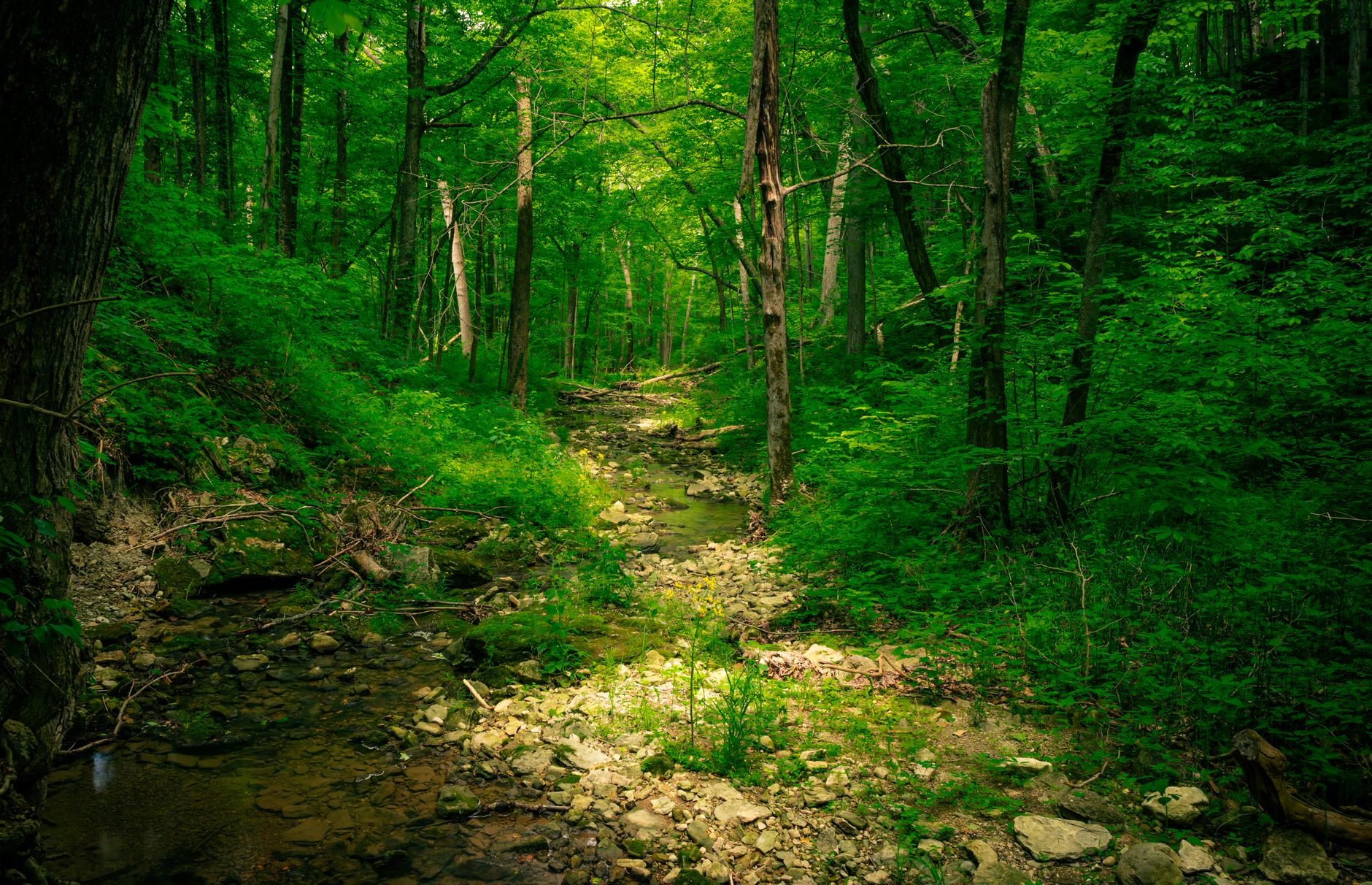

Panther Hollow is one of the most accessible wild spaces in Pittsburgh, and somehow still one of the least visited. The ravine runs through the heart of Schenley Park, connecting the Panther Hollow Lake at its western end to a network of creek trails that push into the forested hillsides above Oakland. You can reach it in 10 minutes from Carnegie Mellon University on foot. Most students spend four years without ever walking down into it.
That obscurity isn't an accident. Panther Hollow doesn't announce itself. There's no visitor center, no parking lot with a sign, and no obvious trailhead with a map kiosk. You find it by knowing it's there, or by following the creek sound down from Schenley Drive.
What Panther Hollow actually is
The hollow is a glacially carved ravine, roughly a mile long, that drains into Panther Hollow Run. The creek feeds into Panther Hollow Lake, a small impoundment near the entrance to Schenley Park that most people drive past on their way to Phipps Conservatory. The lake itself is peaceful but modest. The real draw is the trail corridor behind it, where the valley narrows and the tree canopy closes overhead.
The trail system inside the hollow connects to the broader Schenley Park network, which covers 456 acres and is the largest park in Pittsburgh's Oakland corridor. Panther Hollow sits within those boundaries but feels like a separate world from the tennis courts and the golf course on the park's upper plateau. The hollow stays cool in summer, shaded by a mix of oak, beech, and maple that fills in thick by June.
The main trail follows the creek bed, crossing it twice on wooden footbridges that the city has rebuilt over the years. Trail conditions vary by season. Spring brings mud and occasional flooding after heavy rain. Fall offers the best footing and the best light, with the leaf cover thinning just enough to reveal the ravine walls above you.
How to enter the hollow
There are three practical entry points, and each one gives you a different relationship with the terrain.
- From Panther Hollow Road: The most direct access. Park near the lake and walk the paved path east until the trail branches into the woods. The grade is gentle for the first quarter mile.
- From Boundary Street in Oakland: A steeper entry that drops you directly into the ravine from the neighborhood edge. This is the route most walkers from Carnegie Mellon take if they know it at all.
- From the Greenfield Bridge overlook: The bridge spans the hollow at its deepest point, giving you a view of the creek corridor below before you descend via a set of switchback stairs cut into the slope.
The Greenfield Bridge entry is the most dramatic approach. Standing on the bridge, you can see the full depth of the ravine, roughly 70 feet from bridge deck to creek level. It's one of the better vantage points in a city that's full of unexpected ones.
Wildlife and what to expect
Panther Hollow supports a surprisingly dense wildlife corridor for a space surrounded by dense urban development. Great blue herons visit the lake regularly. Red foxes move through the ravine at dawn and dusk. The creek itself holds crayfish and small fish year-round, which makes it a productive hunting ground for raccoons and the occasional great blue heron.
Birding is good here in spring migration. The hollow acts as a funnel for songbirds moving through Pittsburgh between late April and early June, with warblers, vireos, and thrushes using the creek corridor as a rest stop. Bring binoculars if that's your thing. You don't need to announce the hollow to birding communities; they already know.
Dogs are allowed on leash, and the hollow gets steady weekend traffic from Oakland residents running the loop. On weekday mornings, it's often empty enough that you'll hear the creek before you see another person.
The hollow and Pittsburgh's larger green network
Panther Hollow connects westward through Schenley Park trails toward Bartlett Street and the edges of Greenfield. To the east, informal paths push up toward the Hazelwood boundary, though these require some route-finding. The creek itself eventually reaches Junction Hollow, where the Nine Mile Run watershed begins its long corridor toward the Monongahela.
That connection matters for anyone thinking about Pittsburgh's urban ecology. Panther Hollow Run is one of the city's tributary streams that flows directly into the broader watershed, which makes its health a real measure of Pittsburgh's environmental stewardship. The stream has been partially daylighted and restored in sections over the past decade, with native plantings along the bank reducing erosion and improving water quality.
Pittsburgh's network of ravine parks, which includes Frick Park to the east and Riverview to the north, forms a green infrastructure system that often goes unrecognized because it doesn't look like a park from the street. The hollow fits squarely in that tradition: nature that requires a short commitment to find, and rewards that commitment immediately.
Practical notes before you go
The hollow has no facilities inside it. No restrooms, no water fountains, no picnic shelters. The nearest amenities are at the main Schenley Park complex near Overlook Drive. Bring water, especially in summer when the tree canopy that keeps the hollow cool also makes the humidity dense.
Trail surfaces are unpaved throughout. Sturdy shoes or light hiking boots make the creek crossings much more manageable than sneakers. After a heavy rain, the footbridges can flood and the creek itself spreads. Wait a day and the drainage is fast.
If you're looking for a longer outing, combine the hollow with a walk along the steep trail network on the hillsides above Greenfield. The two corridors connect loosely and together give you close to 3 miles of varied terrain without ever touching a road.
Parking is easiest on Panther Hollow Road near the lake, free and usually open on weekends. On Carnegie Mellon and Pitt event days, the nearby lots fill fast. Come early or walk from Oakland. The hollow will be quieter for it.