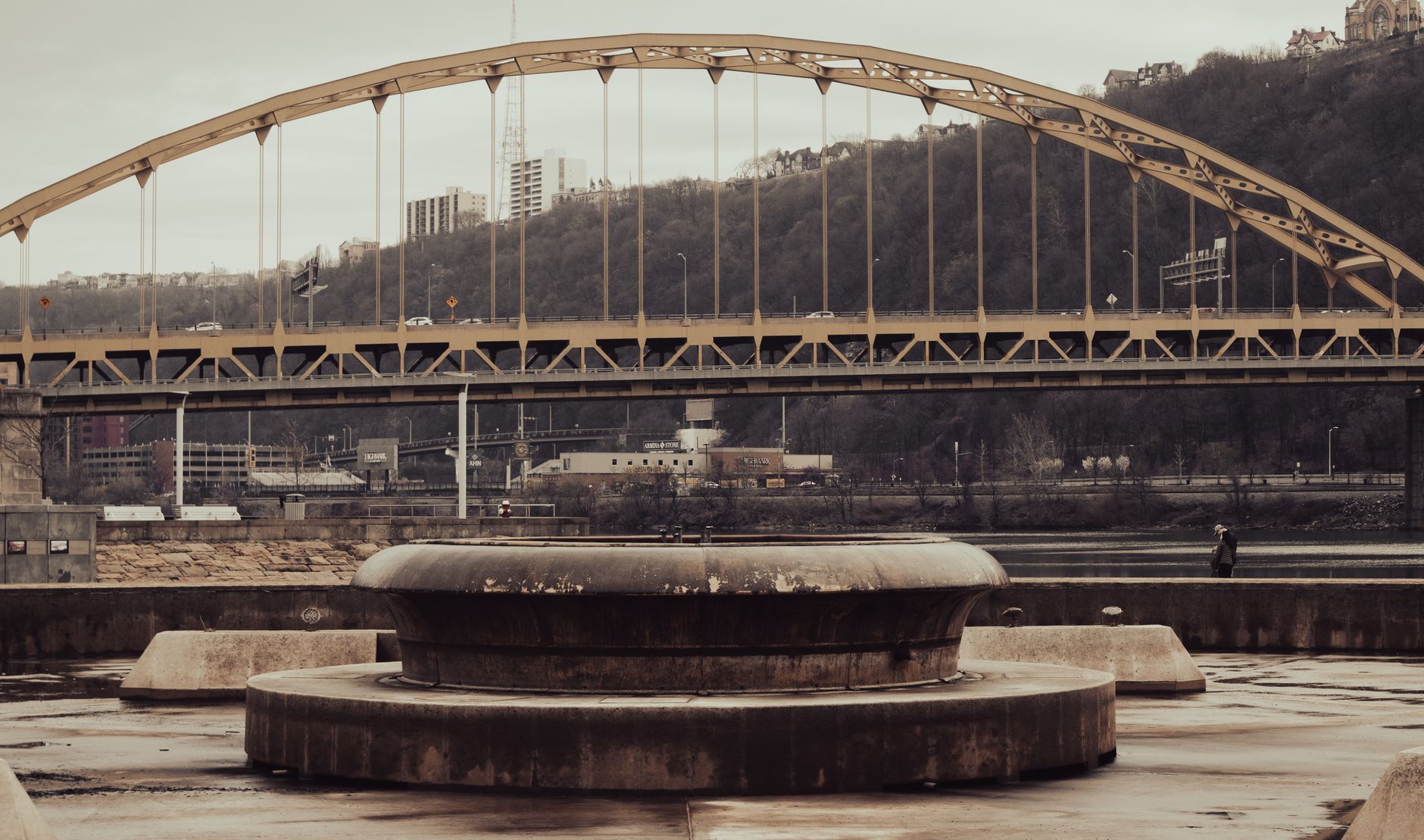

Point State Park occupies 36 acres at the tip of Pittsburgh's Golden Triangle, precisely where the Allegheny and Monongahela rivers converge to become the Ohio. It's a spot that has mattered to human settlement for centuries, from the original Seneca trade routes to Fort Duquesne to Fort Pitt. Today it functions as both a living park and a compressed history of the region, and it draws more than 3 million visitors a year without ever feeling like a tourist trap.
What you'll actually find at the park
The centerpiece is the fountain. Point State Park's signature fountain shoots a single jet of water roughly 150 feet into the air, fed by an underground spring that flows from the confluence itself. It runs seasonally from late April through October, and on a clear afternoon, the mist reaches halfway across the lawn. Most Pittsburghers have a memory tied to it, whether that's a Pirates parade, a Fourth of July concert, or just a lunch break in the grass.
The Fort Pitt Museum sits inside the park's reconstructed Monongahela Bastion, one of the original fort's defensive structures. The museum focuses specifically on the French and Indian War and the early colonial competition for this stretch of the Ohio River Valley. It's small, well-curated, and easy to miss if you're only coming for the fountain. Don't miss it. The Fort Pitt Museum charges a modest admission and runs regularly through the season.
The park also contains the Fort Pitt Block House, which dates to 1764 and is the oldest authenticated structure in western Pennsylvania. It's managed by the Daughters of the American Revolution and open for tours on a seasonal schedule. Standing next to something that old, in the middle of a modern downtown, creates a strange and worthwhile dissonance.
The park's role in Pittsburgh's public life
Point State Park hosts a range of events that reflect the breadth of the city's community. Three Rivers Arts Festival, which fills the park and surrounding blocks each June, draws artists and audiences from across the region. EQT Pittsburgh Three Rivers Regatta, the Labor Day weekend event, uses the park as its staging ground for powerboat racing and air shows on the rivers. During Steelers or Pirates playoff runs, the space becomes an informal gathering point for thousands of people who simply want to be somewhere together.
The lawn itself sees daily use that doesn't make headlines: lunchtime yoga groups, photographers working the skyline angles, families walking the riverfront path, and the occasional wedding ceremony with the fountain as backdrop. Pittsburgh's relationship with its rivers has changed enormously over the past two decades, and Point State Park sits at the center of that shift. Organizations like Riverlife Pittsburgh have worked to connect the park to a longer network of riverwalk trails that now stretch miles in each direction.
Getting there and getting around
The park is accessible from downtown Pittsburgh on foot, by bike, by water taxi, and via Pittsburgh Regional Transit. The T light rail stops at Steel Plaza and Gateway Center, both a short walk from the park's eastern entrance. Parking near the Golden Triangle is tight and expensive on weekends; the riverfront approach on foot from the North Shore via the Roberto Clemente or Andy Warhol Bridge is a better option and gives you better views.
The park connects directly to the Heritage Trail, which runs along the north bank of the Monongahela toward the South Side. It also links to the Three Rivers Heritage Trail network on the North Shore side. Cyclists have a relatively smooth path from the park west into the Ohio River trail system. For anyone curious about how Pittsburgh's hills and terrain factor into getting around on foot, the city's incline trails and steep hillside paths offer a useful counterpoint to the flat riverfront walking.
A few things first-timers get wrong
People often assume the park is just the fountain and the lawn. It's bigger than it looks from the road. Walking the full perimeter, including the stone paths along the river edges, takes about 40 minutes at a relaxed pace and offers angles on the city's three bridges that you won't see from anywhere else.
The park is also officially a Pennsylvania state park, which means it's managed by the Department of Conservation and Natural Resources, not by the City of Pittsburgh. That distinction matters when it comes to permitted events and maintenance decisions. It also means the park stays relatively well-funded compared to city-managed green spaces. Pittsburgh's broader park system covers more than 2,800 acres, and a good overview of how Point State Park fits into that larger picture is worth reading in any guide to Pittsburgh's green spaces.
One more thing: the fountain doesn't run in winter. If you're visiting between November and April, the park is still open and worth the walk, but plan accordingly. The bare trees in January actually give you a cleaner view of the skyline than summer's foliage does, and the riverbanks are nearly empty. It's a different kind of good.