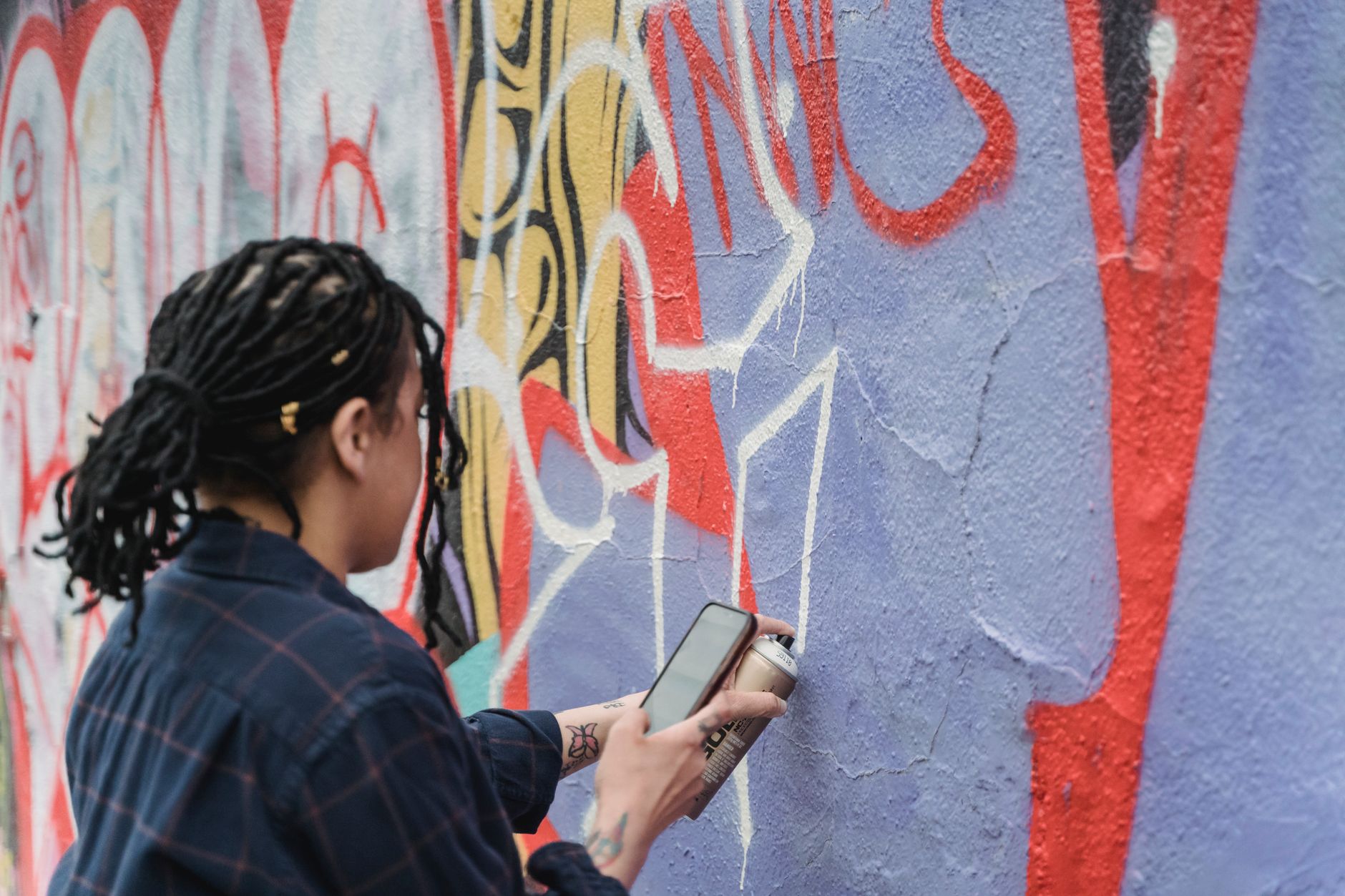

Pittsburgh has a rich, documented public art culture: the mosaic installations in its stairwells, the commissioned murals stretching across Butler Street, the sculptures in its parks. But beneath that layer sits a parallel tradition that doesn't ask for permits. Pittsburgh's graffiti writers have been hitting freight trains, rail yards, highway underpasses, and alley walls since the early 1980s, and the scene they built is older, stranger, and more self-contained than most Pittsburghers realize.
Graffiti writing, in the strict sense, means lettering. Not abstract spray painting, not muralism, but the discipline of rendering letters in ways that balance legibility, style, and speed. It has its own language: throw-ups, pieces, blockbusters, wildstyle. Writers spend years perfecting a single tag before they graduate to full productions. The craft is closer to calligraphy than it is to vandalism, even if the law doesn't see it that way.
The freight yard and the reputation it built
Pittsburgh's geography made it a natural hub. The city sits at the confluence of three major river corridors, and rail lines follow those rivers. Freight trains moving through Pittsburgh's yards carry work east to New York, west to Chicago, south to Baltimore. A piece painted in Pittsburgh can be spotted in a rail yard in Kansas City six weeks later. That reach made Pittsburgh freight a respected target, and the writers who hit it consistently built reputations that extended far beyond Allegheny County.
The freight culture here peaked in the late 1990s and early 2000s, when a loose community of writers developed a Pittsburgh aesthetic: block letters with heavy fills, a fondness for silver and chrome, and the kind of clean outlines that hold up when a car is doing 60 mph. Some of those writers are still active. Others have moved into commercial lettering, sign painting, or tattoo work, carrying the same visual instincts into formats that pay.
Legal walls and the tension around them
Pittsburgh doesn't have an official, city-designated legal wall the way some European cities do. What it has instead is a collection of semi-tolerated spots: walls that property owners have quietly accepted will get painted, spaces under bridges where no one is going to file a complaint. These are discovered through the network, not through a city website.
The tension between graffiti writers and Pittsburgh's public art world is real but overstated. Writers and muralists share some of the same spaces, and in Lawrenceville especially, the line between a legal mural commission and an unauthorized throw-up on the same block is sometimes a single property owner's decision. Pittsburgh's Lawrenceville mural scene has grown large enough that it's absorbed some writers into its orbit, commissioning people who cut their teeth illegally into producing large-scale legal work.
Not everyone in the graffiti community welcomes that crossover. Some writers see a commissioned mural as a fundamentally different thing from what they do. The risk, the speed, the anonymity: those aren't incidental to the culture, they're central to it. A piece you painted in 20 minutes at 2 a.m. carries different weight than one you spent a week planning with a property owner's sign-off.
What writers say about Pittsburgh as a city
Writers who've been active in Pittsburgh for 15 or more years describe the city in terms that echo what urban planners say but from a different angle. The hills create natural separation between neighborhoods, which historically kept different writing crews from overlapping too much. The river corridors created long, uninterrupted surfaces. The density of older industrial infrastructure, the brick walls, the loading dock alleys, the underpasses, gave writers more material to work with than a newer, cleaner city would.
Pittsburgh's lettering culture runs wide. The hand-lettering tradition in sign painting and storefront art has always overlapped with graffiti writing in ways that are hard to untangle. Pittsburgh's hand lettering community includes people who learned their letterforms on walls before they ever picked up a brush for a shop window. The craft transfers because the underlying discipline is the same: proportion, spacing, weight, rhythm.
How the next generation is learning
There is no school for this. Writers learn from each other, from photographs, from studying pieces in person, and from filling sketchbooks. The blackbook, a personal sketchbook of lettering studies and planned pieces, remains the standard learning tool. A writer's blackbook is a record of their development, a portfolio, and a practice space all at once.
YouTube and Instagram changed the learning curve. A writer in Pittsburgh's East End can now study techniques from writers in Berlin or São Paulo and absorb them in an afternoon. That's accelerated the skill level at the bottom of the scene while also flattening some regional distinctiveness. The Pittsburgh aesthetic that defined freight work in the 1990s is harder to see clearly now that styles have blended across platforms.
What hasn't changed is the social structure. Writers still earn standing through output, consistency, and geography covered. A name that appears across the city, across freight lines, across years, builds a reputation that no follower count replicates. The writing community in Pittsburgh remains small enough that people know who's been active and who has faded, and that collective memory is its own record.
The case for taking it seriously
Pittsburgh has been thoughtful about recognizing forms of creative practice that don't fit institutional categories. The city's broader public art tradition, detailed across hundreds of public installations and sculptures woven into its streets and parks, grew partly from taking artists seriously before they had gallery representation. Graffiti writing hasn't reached that threshold in official terms, but the visual intelligence it requires is not in question among people who look closely at it.
The writers doing this work in Pittsburgh aren't asking for recognition. Most of them prefer not to be named. That's part of the discipline. But the walls they've shaped, the freight cars they've painted, the letterforms they've refined over decades: those are a real part of what this city looks like, and they're worth understanding on their own terms.