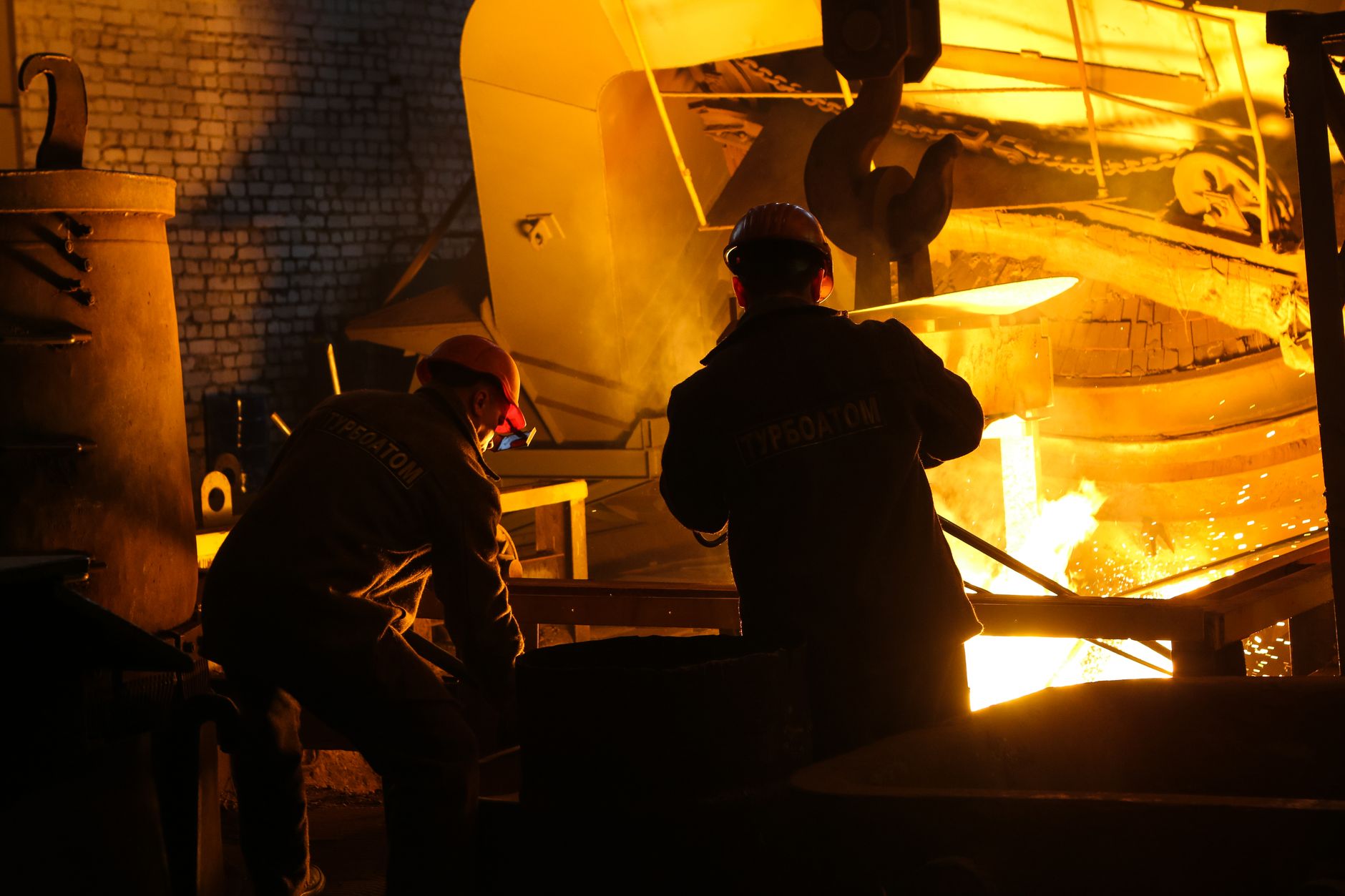

The phrase "union brothers" carries real weight in Pittsburgh. For most of the twentieth century, it wasn't a slogan. It was how workers described one another across the steel mills, coal yards, and trade halls that defined this city. The labor movement built Pittsburgh's middle class, shaped its neighborhoods, and gave the Mon Valley its identity. Understanding that history, and where the city's union culture stands today, tells you a lot about how Pittsburgh works and who it's working for.
Where the union tradition came from
Pittsburgh's labor story starts at the furnaces. The Carnegie Steel era created enormous wealth, and almost none of it flowed to the workers shoveling ore and tapping slag at 2 a.m. The Homestead Strike of 1892 became one of the most significant labor confrontations in American history, a brutal standoff between steelworkers and Pinkerton agents that ended badly for the union but planted something that wouldn't die. Workers kept organizing. The United Steelworkers of America, headquartered in Pittsburgh, eventually became one of the largest and most powerful industrial unions in the country. The United Mine Workers weren't far behind.
By the 1940s and 1950s, union membership in Allegheny County ran deep. Men who worked the same mill often lived on the same block, drank at the same taproom, and sent their kids to the same school. The union hall wasn't just where you filed a grievance. It was a community institution, sometimes more central to daily life than a church. The sense of solidarity that defined those decades, the literal meaning of "union brothers," was both economic and social. It was a form of belonging.
What the deindustrialization era changed
The collapse of Pittsburgh's steel industry in the late 1970s and early 1980s hit union membership like a demolition charge. More than 100,000 manufacturing jobs disappeared from the region in roughly a decade. The mills closed. The union halls quieted. Entire neighborhoods in Homestead, McKeesport, and Braddock lost their economic reason to exist. The Pittsburgh that had been one of the most heavily unionized cities in the United States became something else: a city trying to reinvent itself through universities, hospitals, and technology.
That reinvention succeeded in ways few observers predicted in 1985. But it also produced a workforce that looks very different from the one that preceded it. Healthcare is now the region's largest employment sector, and the workers in those hospitals are largely represented by SEIU and other service unions, not the steelworkers' locals that once commanded attention. Carnegie Mellon and Pitt drive enormous amounts of economic activity, but researchers and grad students don't typically organize the same way mill crews did. The union brothers of the twenty-first century work in operating rooms, school buildings, and transit yards rather than in blast furnaces.
Who carries the labor identity today
The United Steelworkers still calls Pittsburgh home. USW headquarters remains at Five Gateway Center, a physical reminder that the city's labor infrastructure didn't vanish, it adapted. The union now represents workers across healthcare, manufacturing, and rubber industries well beyond Pittsburgh's borders, but its roots here remain visible.
Local 1 of the Amalgamated Transit Union represents the workers who run Pittsburgh Regional Transit, keeping the bus and light rail system moving. Locals affiliated with the AFL-CIO cover trades from electrical work to plumbing across the construction boom reshaping the Strip District, East Liberty, and Hazelwood. The trades have actually benefited from the city's development wave. More cranes mean more ironworkers and carpenters working union contracts on sites across the city. That's one piece of the labor picture that looks healthier than it did in 2005.
The Hill District and neighborhoods like Hazelwood have also seen community groups push for project labor agreements on publicly funded developments, demanding that the jobs created by redevelopment pay union wages and provide apprenticeship pathways for local residents. The argument these groups make echoes what the old union brothers always said: a job worth doing is worth doing with a contract.
The Hill District and labor's community roots
Few places in Pittsburgh carry the union and labor tradition as deeply as the Hill District. The neighborhood's history is inseparable from Black workers who were often excluded from the earliest union structures but built their own forms of collective organization, in the church, in fraternal societies, and eventually in the labor halls that opened to them. That layered history shapes how residents there think about work, wages, and who development serves today.
Organizations like the Hill District Consensus Group have insisted, loudly and consistently, that the development reshaping their neighborhood deliver real economic benefits to existing residents. That's a form of the same bargaining the old union brothers understood. It's just happening outside a formal contract structure, in community meetings and public hearings rather than on a factory floor. Pittsburgh's mutual aid networks have picked up some of that same role, organizing labor and resources outside traditional institutional channels.
Labor's presence in Pittsburgh's current economy
Pittsburgh's technology sector, the part of the economy getting the most attention in 2026, is largely non-union. Autonomous vehicle companies, biotech startups, and software firms typically don't operate under collective bargaining agreements. That's a national pattern, not specific to Pittsburgh. But it creates a real tension in a city whose identity is built on the idea that workers have power and deserve a fair share of what they produce.
Some of that tension is playing out in higher education. Graduate student organizing has been active at the University of Pittsburgh, following a national wave of graduate worker unionization at major research universities. That's a different context from a steel mill, but the fundamental question is the same one union brothers asked a century ago: does the person doing the work have a seat at the table?
Pittsburgh's Hill District and neighborhoods like Hazelwood are where that question gets answered most concretely, where redevelopment dollars either flow through to workers or don't. The city's labor identity is alive. It's just working harder to stay visible in an economy that doesn't always make room for it by default.
What the legacy actually means for Pittsburgh now
The union brothers who built this city left behind more than a collective bargaining model. They left behind a set of expectations about what work should provide: a living wage, safe conditions, some say in how things are run, and a path to stability that you could build a family around. Those expectations still shape how Pittsburghers talk about jobs, even when the word "union" doesn't come up.
That's the real inheritance. Not just the locals and the halls and the contracts, but the conviction that workers aren't just inputs. Pittsburgh built itself on that idea. The people pushing for project labor agreements in the Hill District, for transit worker contracts on the North Shore, for fair wages in the hospitals of Oakland: they're working in the same tradition, even if they'd never use the phrase union brothers to describe it.
The city is better at honoring that legacy in memory than in policy. But memory matters. It sets a floor.