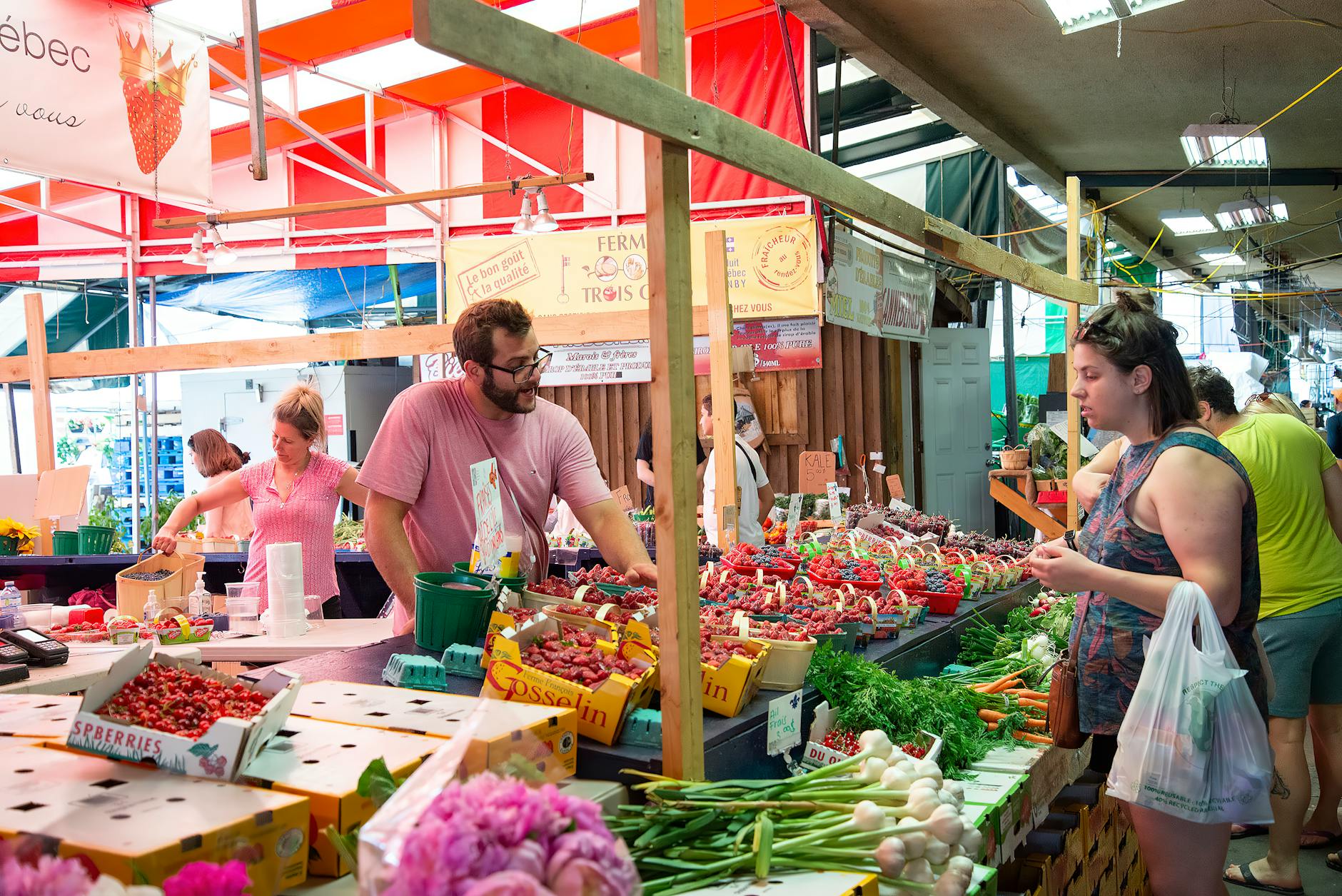

Pittsburgh's farmers markets are not a seasonal novelty. Several of them run straight through winter, and the variety on offer, from heritage grain flours to locally raised pork to Korean ferments, has expanded steadily over the past decade. Whether you live in the East End or the South Hills, there's almost certainly a market within a few miles that you haven't tried yet.
Pittsburgh Public Market: the year-round anchor
The Pittsburgh Public Market, housed in a permanent space in the Strip District, is the city's most reliable option for consistent, year-round shopping. Vendors cycle in and out, but the core lineup, which includes Two Guys From Wood's Edge for eggs and poultry, Goat Rodeo for cheese, and Black Bear Farm for beef, holds steady. It's open Fridays and Saturdays and draws serious grocery shoppers alongside tourists doing the full Strip District crawl.
The Strip District itself rewards early arrivals. Get there before 10 a.m. and the stalls at Pennsylvania Macaroni, Penn Mac's outdoor seasonal bins, and the smaller pop-up vendors are still full. The Strip District's reinvention over the past decade has actually helped the market: more foot traffic means more vendors can justify a Saturday setup, and the diversity of what's on offer reflects how the neighborhood has changed.
East End Co-op Saturday market and Squirrel Hill options
The East End Food Co-op in Point Breeze hosts a Saturday outdoor market from May through October. It's small, maybe 12 to 15 vendors on a good week, but the quality ceiling is high. Dozen Bakery shows up regularly with sourdough loaves that sell out by noon. Wild Purveyors brings foraged mushrooms and ramps in season. This is the market for people who want to spend less time walking and more time buying.
Squirrel Hill doesn't have a dedicated outdoor market, but the concentration of specialty grocers along Murray Avenue means residents can fill a CSA-sized haul without crossing a bridge. The question is whether you want the social ritual of a market or just the product, and Squirrel Hill answers that differently depending on the week.
Farmers markets in Oakland and the North Side
The University of Pittsburgh's Cathedral of Learning plaza hosts a lunchtime farmers market on Wednesdays during the growing season, running roughly June through October. The crowd skews heavily toward students, hospital workers from nearby UPMC, and the lunch rush from the Oakland office corridors. Vendors tend to offer smaller package sizes, which suits the zip-in-zip-out format. It's not the place to buy a half-bushel of tomatoes, but it's ideal for a bunch of radishes and a loaf of bread on a Wednesday.
The North Side's Allegheny Commons and Central Northside neighborhoods have supported smaller pop-up markets in recent years, with varying consistency. The Allegheny Wine Mixer on the North Side has collaborated with local vendors at weekend events, blending retail with the farmers market energy that the area hasn't fully captured in a dedicated weekly setup. Worth watching as the North Side's food scene continues to develop.
South Side and Beechview markets
The South Side Farmers Market runs on Sundays along East Carson Street during summer months. It's never been the biggest market in the city, but it punches up in certain categories. Two or three consistent vendors bring organic vegetables, and there's usually a jam or preserve maker worth stopping for. East Carson's foot traffic keeps it viable even in the years when vendor counts dip.
Beechview, further up the 18 corridor, has hosted a smaller community market that skews heavily toward Latino and Southeast Asian produce, reflecting the neighborhood's demographics. If you're hunting for fresh tomatillos, bitter melon, or long beans in bulk, this is the market that will surprise you. It runs on a less formal schedule than the larger markets, so checking neighborhood Facebook groups or the Beechview Community Development Council before making the trip is worth the 30 seconds it takes.
What to know before you go
Most Pittsburgh markets accept credit cards now, but cash still moves faster, especially at smaller vendors who run everything off a single Square reader with a line forming behind you. Bring a bag, or buy one on site. Parking around East End markets is tighter than it looks on a map, Saturdays especially.
The seasonal rhythm matters. March and April are lean months at outdoor markets. May is when things actually open up, stone fruits arrive in July, and the real abundance runs August through mid-October. If you're shopping in November, you're in root vegetable and storage apple territory, which is its own kind of good.
A few vendors sell at multiple markets across the week, so buying from your neighborhood Wednesday market often supports the same farm you'd visit at the East End Co-op on Saturday. That's not a reason to consolidate your trips. It's a reason to feel good about splitting them up across the kind of slow Saturday mornings Pittsburgh is genuinely good at.
Farms and vendors worth knowing by name
Clarion River Organics has been one of the most consistent presences across Pittsburgh's market circuit for years, bringing certified organic vegetables from their farm in Clarion County. Churchview Farm in the South Hills sells directly to customers through a CSA and at select markets. Deadman's Winery out of Slippery Rock occasionally appears at market events. Greymont Farm supplies beef and pork to several markets and also sells direct through their website.
The farmers market circuit in Pittsburgh isn't perfect. It skips whole neighborhoods entirely, it's weather-dependent in ways that frustrate regulars, and the best vendors often sell out before the crowd arrives. But the breadth of what's on offer, the directness of the producer relationship, and the fact that you can buy things in Pittsburgh markets that genuinely don't exist anywhere else in the city's grocery ecosystem makes them worth building a routine around.
Start with one market, go three Saturdays in a row, and you'll understand what the regulars already know.