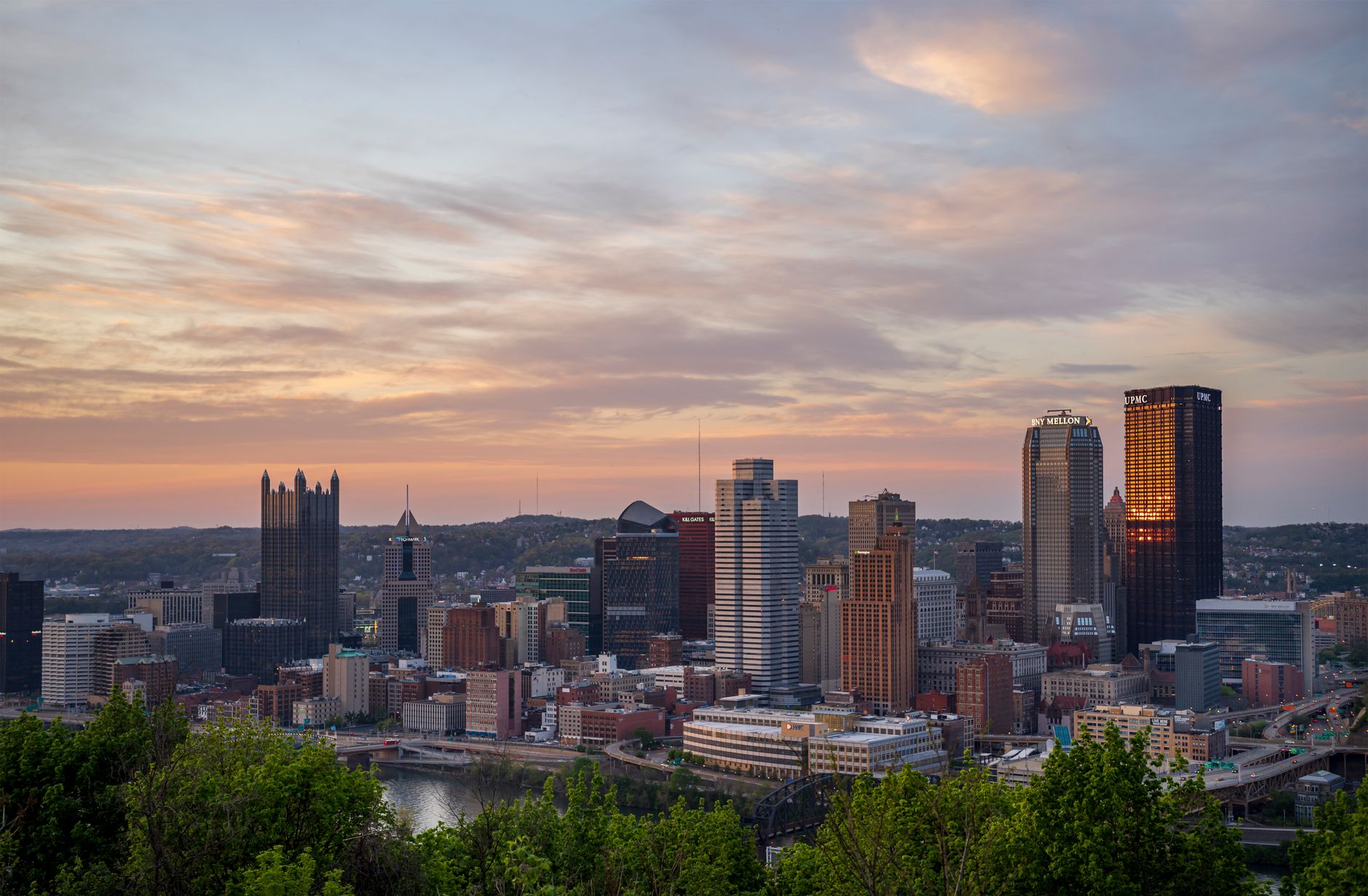

Pittsburgh has more than 90 officially recognized neighborhoods, and that number doesn't account for the micro-distinctions locals draw between blocks. If you're moving to Pittsburgh and trying to pick a place to land, the sheer variety can feel paralyzing. Squirrel Hill, Lawrenceville, Mt. Lebanon, Bloomfield, Shadyside, Garfield: the names are everywhere, but what separates them in practice? This guide works through the real tradeoffs so you can narrow the field before you start touring apartments.
Start with the honest question: do you want a car-optional life?
Pittsburgh's topography makes transit uneven in a way that flat cities don't prepare you for. Some neighborhoods have frequent bus service and walkable commercial strips. Others require a car for almost everything. This single question eliminates a lot of options fast.
If you want to skip a car entirely, the strongest choices are Oakland, Shadyside, Squirrel Hill, Lawrenceville, and the Strip District. All of these sit on busy Port Authority bus corridors. Oakland is the most walkable square mile in the city, with groceries, cafes, and universities within a short walk of most apartments. Squirrel Hill has a dense commercial stretch along Murray and Forbes that functions like a proper neighborhood main street. Lawrenceville's Butler Street has exploded with independent shops and restaurants over the past decade.
If you're fine with driving or see a car as a given, the South Hills suburbs open up. Mt. Lebanon and Peters Township offer spacious housing, good school districts, and easy highway access. The tradeoff is that you're commuting in, not walking out. For families prioritizing schools and square footage over proximity to nightlife, that tradeoff often makes sense. The Mt Lebanon Recreation Center is one signal of what South Hills communities invest in: full aquatics programs, ice rinks, and fitness facilities that walkable urban neighborhoods rarely offer.
Matching your stage of life to the right corridor
Pittsburgh's neighborhoods cluster fairly naturally by life stage. That's not a rule, but it's a useful frame.
Recent graduates and people in their 20s tend to gravitate toward Lawrenceville, Polish Hill, Friendship, and Bloomfield. Rents are lower than Shadyside. The bar and restaurant density is high. There's a real creative and maker culture running through the East Liberty and Garfield corridors, which the Bloomfield Garfield Corporation has spent decades nurturing through housing advocacy and small business support.
Couples and families buying their first home often look at Regent Square, Swisshelm Park, or Point Breeze. These neighborhoods have solid housing stock, tree-lined streets, and proximity to Frick Park without the price premium of Squirrel Hill proper. Regent Square in particular has a small-town feel: one main intersection, a local bar, a coffee shop, and very little through traffic.
Empty nesters and retirees moving to Pittsburgh often end up in the South Hills or in walkable urban pockets like Shadyside and Squirrel Hill, where density supports daily errands on foot and public transit fills in the gaps.
What your commute destination changes
Pittsburgh's geography means commutes are rarely linear. The rivers, hills, and bridges create chokepoints that don't show up on a map until you're stuck in them at 8 a.m.
If you're working in Oakland, which houses the University of Pittsburgh, Carnegie Mellon, and UPMC, living anywhere in the East End gives you a reasonable commute. Squirrel Hill and Shadyside are the closest. Bloomfield and Point Breeze add maybe 10 minutes by bus. Living on the North Shore or South Side means crossing a bridge, which adds unpredictability.
If you're working Downtown, the options widen considerably. The T light rail connects the South Hills directly to the Steel Plaza station with no transfers. The East Busway runs express buses from the East End. Both the North Side and the South Side have fast bridge connections. Downtown workers have the most flexibility in where they choose to live.
Tech workers heading to the Strip District or the robotics corridor in Hazelwood have more specific geography to navigate. Living in Lawrenceville or the East Liberty area keeps the commute short and puts you in the same social ecosystem as most of your colleagues.
Rents, ownership, and what the numbers actually say
Pittsburgh is still one of the more affordable cities in the Northeast, but costs vary more by neighborhood than the headline numbers suggest. A one-bedroom in Lawrenceville now runs in the same range as comparable cities. Oakland is the most expensive rental market in the city because of university demand. Bloomfield and Garfield are meaningfully cheaper for equivalent square footage.
For buyers, the price per square foot in Squirrel Hill runs significantly higher than in Swisshelm Park or Carrick, even though those neighborhoods sit just a few miles apart. The real cost of living in Pittsburgh involves more than rent: property taxes vary by municipality, and the city's Act 511 taxes add a local layer that surprises people coming from states without them.
One honest note: Pittsburgh's "affordable" reputation is most accurate for homebuyers, less so for renters. The rental market has tightened in desirable East End neighborhoods since 2022. If budget is the primary constraint, look at Beechview, Brookline, and the western sections of the South Side Slopes, where rents are lower and the housing stock is solid.
The neighborhoods people overlook
Newcomers often default to the same five or six neighborhoods because those are the ones with the most Google coverage. A few worth adding to your research list:
- Greenfield: Quiet, residential, close to Schenley Park and run by a tight community organization. Underpriced relative to its neighbors.
- Brookline: A genuine neighborhood main street, single-family housing, and some of the better public school options on the South Side.
- Highland Park: Borders the zoo, has a reservoir park, and offers larger homes than Squirrel Hill at lower prices.
- Spring Hill: North Side neighborhood with city views, accessible housing costs, and ongoing reinvestment from community development groups.
None of these have the restaurant density of Lawrenceville or the transit convenience of Oakland. But each offers something the more famous neighborhoods don't: room to breathe, a real community feel, and prices that still leave financial margin.
One last thing to do before you decide
Spend a Tuesday morning in the neighborhoods you're seriously considering. Not a Saturday afternoon. Saturdays lie. They show you foot traffic and open businesses that may not represent your actual daily life. A Tuesday morning tells you what the commute feels like, whether the coffee shop has a line, and whether the streets feel quiet or dead. Pittsburgh rewards that kind of ground-level research in a way that online searches don't replicate.