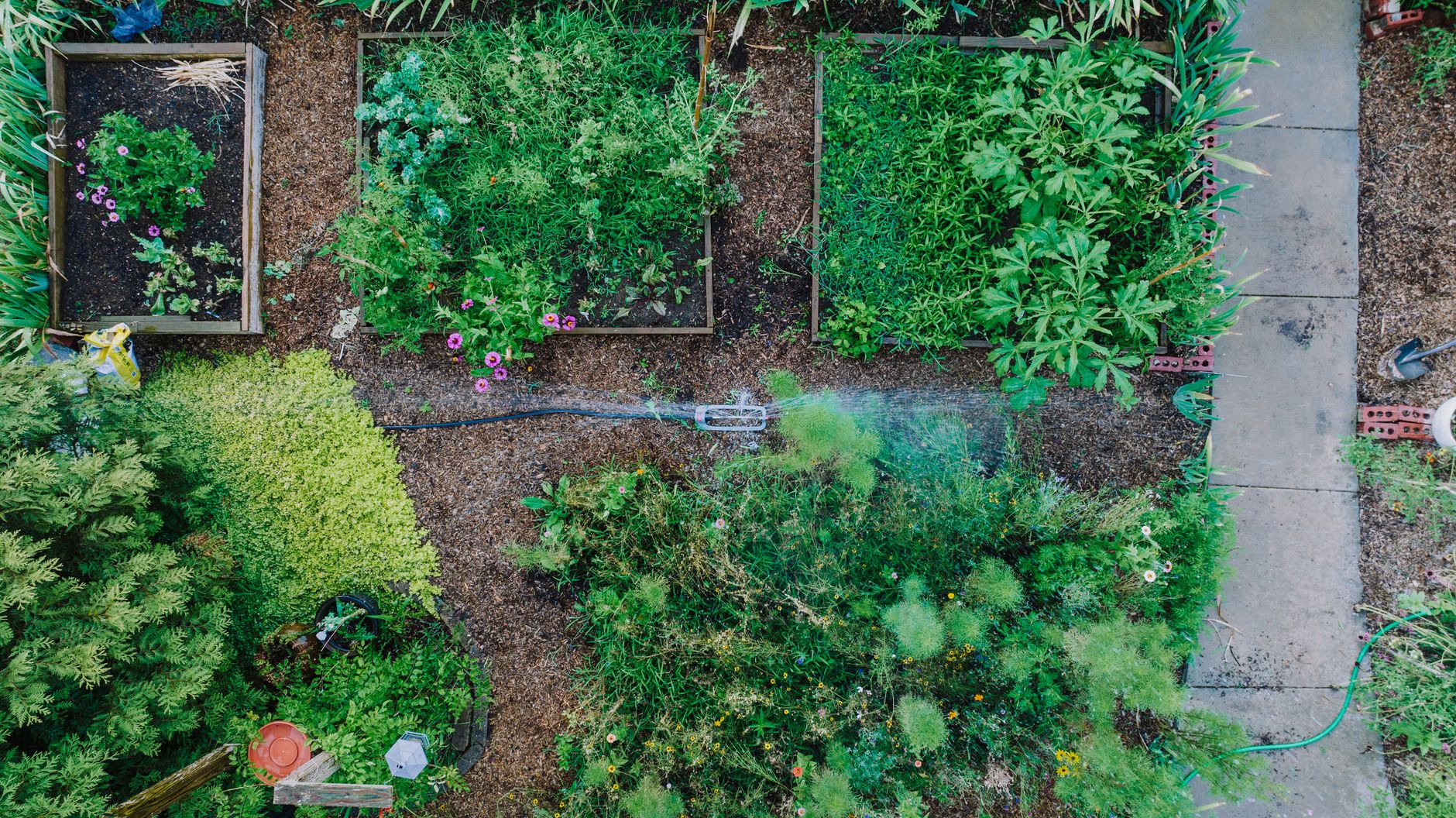

Lawrenceville is known for its murals, its restaurants, and the steady churn of new development along Butler Street. Less visible is what happens behind those rowhouses: a dense, practical culture of backyard food growing that has taken root across Lower, Central, and Upper Lawrenceville over the past fifteen years. It's not a single program or a civic initiative. It's dozens of individual decisions, made by residents who looked at their narrow 18-by-100-foot lots and decided to plant something edible.
Why Lawrenceville works for urban growing
The neighborhood's physical layout is the starting point. Lawrenceville rowhouses share party walls but maintain distinct rear yards, many of which get 6 to 8 hours of direct sunlight during the growing season. That's more than enough for tomatoes, kale, peppers, beans, and the herbs that most Lawrenceville gardeners prioritize first. Pittsburgh's climate gives growers roughly 170 frost-free days, running late April through mid-October in a typical year. That window supports two successions of cool-season crops around a summer main planting.
Soil is trickier. Lots in older urban neighborhoods like Lawrenceville often carry lead contamination from decades of paint and fuel residue. Serious growers here use raised beds filled with a mix of purchased compost and topsoil, keeping roots above the native grade. Allegheny County's soil testing service, offered through Penn State Extension, lets residents confirm their baseline before they plant. The cost runs about $9 per sample, and results take two to three weeks.
What people are actually growing
Walk the back alleys between 40th and 48th Streets on a summer evening and you'll see a consistent set of crops: cherry tomatoes trained up chain-link fences, raised beds stacked with basil and lettuce, grape vines laid over pergolas built from pressure-treated lumber and conduit. Some yards go further. One household on Davison Street has converted its entire rear lot into a no-dig growing system producing squash, garlic, dried beans, and sweet potatoes across eight growing zones. The owners have been at it since 2018 and now trade surplus produce with four neighbors in a loose informal exchange.
Perennials are popular too, because they reduce the annual restart cost. Asparagus, rhubarb, horseradish, and berry bushes show up regularly. A few gardeners have added dwarf apple and pear trees, using espalier training to keep fruit production within the vertical space of a narrow fence line.
Community infrastructure behind the gardens
Lawrenceville United, the neighborhood's main community development organization, has supported backyard food systems in low-key ways: coordinating bulk compost drop-offs, connecting residents to the Penn State Extension master gardener network, and keeping a tool-lending library at its offices on 40th Street. The tool library stocks broadforks, soil blockers, and row cover fabric that most casual growers wouldn't buy outright.
Pittsburgh's food systems organization Pittsburgh Food Policy Council has mapped edible growing sites across the city, and Lawrenceville consistently appears as one of the denser clusters. That density matters: when growers are close together, knowledge spreads faster. A grower on Hatfield Street who figures out how to beat the neighborhood's aphid pressure in June will have told three neighbors about it by July.
The neighborhood's farmers market presence extends this culture outward. The Lawrenceville Farmers Market, which runs seasonally on Penn Avenue, draws vendors from community plots and small urban farms in adjacent neighborhoods. For Lawrenceville backyard growers who produce more than they can eat, the market is one outlet. Neighbors are the other. Pittsburgh's winter CSA scene also connects some growers to longer distribution channels, and Pittsburgh's winter CSA shares have helped formalize the idea of eating local across seasons that used to feel like a growing dead zone.
Challenges the neighborhood hasn't fully solved
Water access is the biggest recurring problem. Many Lawrenceville rowhouses have outdoor spigots, but gardeners with larger setups rely on rain barrels or long hose runs from inside the house. A dry June can wipe out a tomato planting in a week. Residents near the community gardens on Butler Street have better access to tap connections, but backyard growers often go it alone.
Deer are less of a problem here than in the East End's more wooded neighborhoods, but groundhogs have become a real issue in the blocks adjacent to Arsenal Park. A single animal can clear a bed of lettuce overnight. The most effective deterrents are hardware cloth buried 12 inches below grade along the perimeter of a raised bed and a fence extending at least 3 feet above ground. It's more work than most beginners expect.
Shade from new construction is a newer complaint. As infill development adds three-story buildings to formerly open lots, the solar access that once made a neighboring backyard viable can disappear in a single construction season. Lawrenceville's zoning doesn't protect solar access for residential food gardens, which means some growers have had to rebuild their plans around shade-tolerant crops like arugula, spinach, and mint.
What makes Lawrenceville's food culture distinct
Other Pittsburgh neighborhoods grow food too. Bloomfield has deep roots in Italian kitchen-garden tradition. Beechview has active community plots. The Hill District has seen growing investment in food access infrastructure. But Lawrenceville's particular mix of density, population turnover, and creative DIY culture has produced something slightly different: a growing scene that treats food production as part of a wider project of making the neighborhood function on its own terms.
That ethos runs alongside Lawrenceville's broader identity. The same neighborhood that incubated independent studios, small manufacturers, and a design scene that put Pittsburgh on the national creative map has applied a similar sensibility to its back lots. Growing food here isn't nostalgic or countercultural. It's practical, iterative, and shared across back fences in the same way ideas move through any dense creative community. Pittsburgh's adaptive reuse wave gets more attention and more press, but the quieter reuse happening in Lawrenceville's back alleys has been going on just as long.
If you're new to the neighborhood and want to start, the most useful first step is to walk the alleys around your block in late spring. You'll find growers who are almost always willing to talk, share seed, and tell you exactly which variety of paste tomato performs best on a west-facing Lawrenceville fence.