
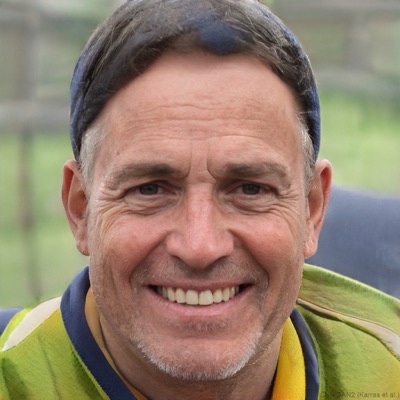
Mira Kaddoura isn't the kind of founder who shows up in venture capital announcements. She built her studio, Red & Co., through client work, clear thinking, and a design philosophy rooted in the belief that a brand is a set of decisions, not a logo. Her story connects directly to Pittsburgh's creative ecosystem, where she sharpened her approach before taking it to a wider stage.
Red & Co. focuses on brand strategy and creative direction for companies at inflection points: startups launching their first real identity, established companies shedding a legacy look, organizations trying to say something true about themselves. The work is rigorous. Kaddoura has been vocal about what she sees as the design industry's weakest habit: confusing aesthetics with strategy. She doesn't start with color palettes. She starts with questions that most clients haven't thought to ask.
What Pittsburgh gave her
Pittsburgh's design and creative community has always punched above its size. The city's art schools produce graduates who stay, or who leave and come back. Carnegie Mellon's design program is one of the most respected in the country, and the ecosystem around it has generated a density of creative talent that rarely gets the recognition it deserves. Kaddoura drew from that environment. Pittsburgh rewards people who think practically about creative work, because the city's history is built on people who made things rather than theorized about making them.
That practicality shows up in how Red & Co. operates. The studio is deliberately small. Kaddoura hasn't scaled it into an agency with 60 employees and a project management layer. She's kept the work close, which means clients get her thinking directly rather than a filtered version of it. That's a founder's choice, not an accident of timing.
Pittsburgh's broader creative scene has been expanding in visible ways. The city's neighborhoods are full of makers, designers, and visual artists whose work shapes the physical environment around them. The murals of Lawrenceville are one of the most obvious signs: a corridor of commissioned and independent work that reflects what happens when a city invests, even informally, in visual culture. Kaddoura's brand of design thinking grows from exactly that environment.
The founder's discipline she practices
Running an independent creative studio requires a specific kind of founder discipline that's different from running a product company. There's no recurring revenue baked into the model. Every engagement is a new relationship. The studio lives or dies on reputation, which means every project is also a marketing asset.
Kaddoura has written and spoken about this plainly. She describes brand work as fundamentally about trust: the trust a company asks of its customers, and the trust a designer asks of a client who doesn't yet know what they want. Getting both right at the same time is harder than it looks, and it's the reason many talented designers never build studios that outlast their first few clients.
Her approach also reflects a broader truth about Pittsburgh's founder culture. The city's entrepreneurial energy isn't centered on one industry. You'll find it in biotech, in food, in software, and in design. The common thread is usually someone who identified a gap and filled it with specific, honest work rather than a pitch deck full of projected growth curves.
What her model means for Pittsburgh's creative economy
Independent brand studios are an underappreciated part of any city's economy. They work with the small businesses, nonprofits, and growth-stage companies that can't afford large agencies but need professional creative thinking. Pittsburgh has a lot of those organizations. The city's startup scene is producing new companies every year, many of which eventually need to figure out what they actually stand for and how to say it.
The Pittsburgh biotech ecosystem, for instance, generates companies that are scientifically sophisticated but often brand-naive. A studio like Red & Co. fills exactly that gap: translating technical identity into language and visuals that a broader audience can trust. That kind of translation work is hard to offshore and hard to automate. It's the sort of creative service that a city builds capacity for slowly, over years, through individual founders like Kaddoura who stay serious about the craft.
Pittsburgh's creative economy is still maturing. The infrastructure for connecting design talent to the companies that need it isn't as developed as the infrastructure for connecting software engineers to employers. But founders like Kaddoura demonstrate what the full arc looks like: start with craft, build a body of work, develop a point of view, and run a practice that reflects it. That's a model more Pittsburgh designers could follow.
What she's building toward
Red & Co. continues to take on clients whose problems are genuinely interesting, which is a filtering criterion that sounds simple and turns out to be extremely hard to maintain. Most studios drift toward whatever work is available. Holding the line on what you'll do and for whom is the discipline that separates a founder with a studio from a freelancer with a website.
Kaddoura hasn't announced any major expansion or pivot. The studio does the work it set out to do. In a creative industry full of people who pivot to the next thing before finishing the current one, that consistency is worth noting. Pittsburgh tends to produce founders like that: people who decide what they're building and keep building it, without a lot of fanfare.