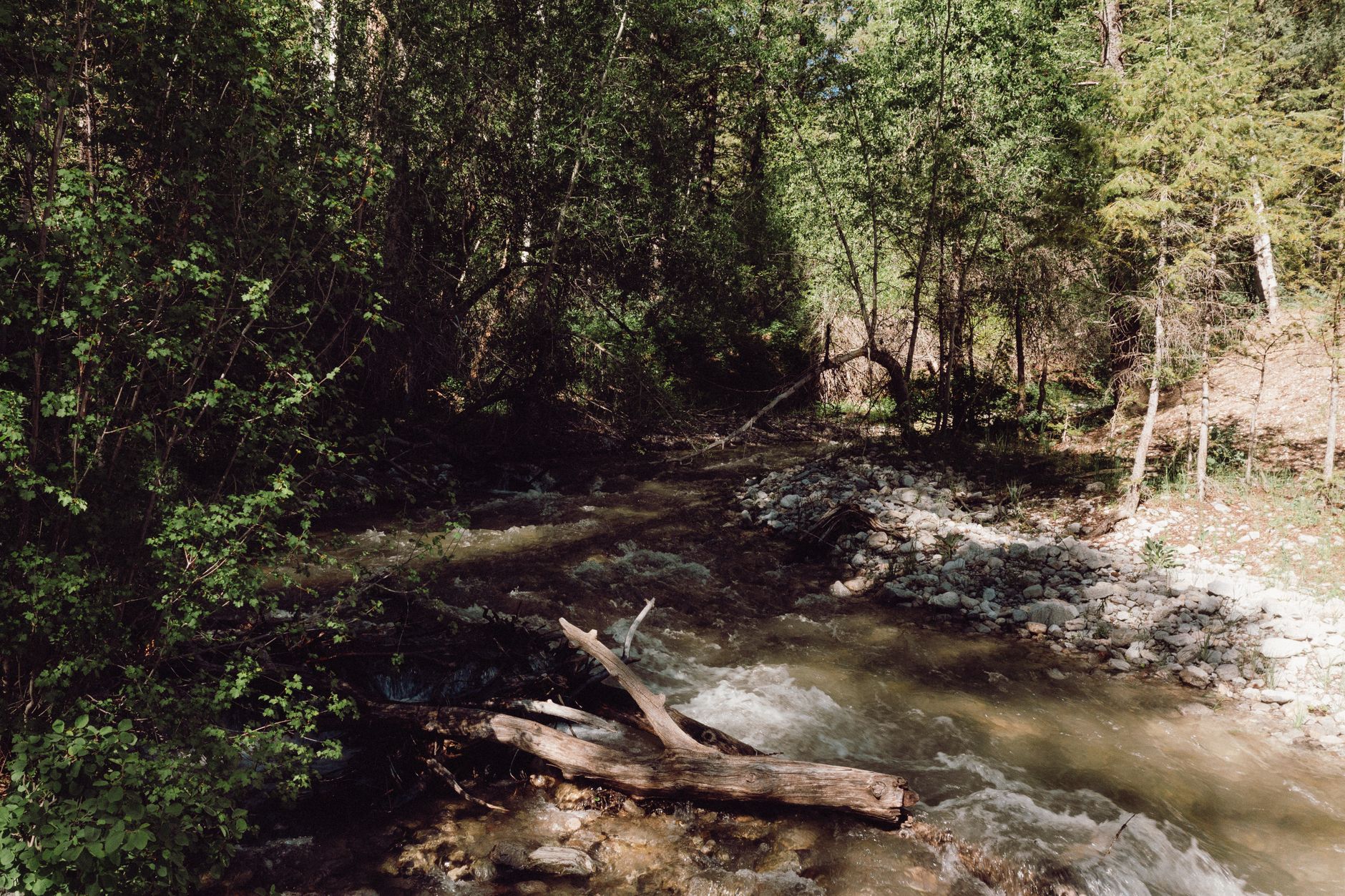

Nine Mile Run doesn't announce itself. It flows through wooded ravines, under footbridges, past joggers who've never thought twice about what they're crossing. But this 4.2-mile stream corridor, threading from Squirrel Hill through Frick Park's urban wilderness and into the Monongahela River, represents one of the most significant urban stream restoration efforts in the northeastern United States. The work it took to get here spans decades, federal funding, and a remarkable coalition of scientists, city agencies, and community volunteers.
What nine mile run looked like before the restoration
For most of the 20th century, Nine Mile Run was a dumping ground. The city of Pittsburgh used the stream valley as a slag disposal site for decades, depositing millions of tons of steel mill waste along its banks. The slag buried the original streambed in several locations, destroying the aquatic habitat, raising the stream's pH, and choking out the native plant communities that once held the slopes together.
By the 1990s, the lower portion of the stream was barely recognizable as a natural waterway. Invasive species had colonized the slag deposits. Stormwater surged through the channel unchecked, eroding the banks and carrying sediment directly into the Mon. Fish populations were negligible. The stream scored poorly on every biological indicator researchers used to assess its health.
What saved Nine Mile Run wasn't a single decision. It was a collision of timing, advocacy, and federal resources that arrived at exactly the right moment.
How the restoration project came together
The Nine Mile Run Watershed Association, founded in the late 1990s, became the organizational spine of the project. The group worked alongside the Pittsburgh Department of Public Works, the Army Corps of Engineers, and researchers from Carnegie Mellon University and the University of Pittsburgh to design a phased restoration plan. Federal funding through the EPA's Urban Waters program helped cover costs that would have been impossible for a city government to absorb alone.
The physical restoration involved reshaping the streambed to re-establish natural meander patterns, removing accumulated slag from the most degraded sections, and replanting the slopes with native species. Engineers also addressed the stormwater problem upstream, installing green infrastructure in parts of Squirrel Hill and Point Breeze to slow runoff before it reached the channel.
The project moved in stages across multiple years. The lower reaches near the Mon outfall saw the earliest and most intensive intervention. Progress upstream followed more slowly, constrained by access, budget, and the sheer difficulty of working in a steep, narrow valley that runs through a densely populated residential area.
What the creek looks like today
Walk the Nine Mile Run trail on any weekday morning and you'll encounter something that reads as ordinary: a clear-running creek, herons standing in the shallows, a pair of wood ducks moving through the slower pools. That ordinariness is the point. The restoration team's goal was never a showpiece. It was functional ecology: a stream that cleans itself, supports aquatic life, and manages stormwater the way a healthy watershed does.
Water quality monitoring has shown measurable improvement in dissolved oxygen levels and biological diversity since the restoration work began. Several native fish species have returned to sections of the stream that were biologically dead two decades ago. The riparian plant communities along the banks have thickened, stabilizing slopes that were actively eroding just years earlier.
Nine Mile Run now connects to the broader trail network that runs through Frick Park, making it accessible to thousands of residents year-round. The trail passes through some of the most ecologically diverse terrain within the Pittsburgh city limits, a contrast that's especially striking given that dense residential neighborhoods sit just a few hundred meters from the stream corridor on either side.
The ongoing challenge: what's still unfinished
Restoration is not the same as recovery. Nine Mile Run still faces real pressures. Invasive species, particularly Japanese knotweed and multiflora rose, continue to advance along sections of the upper watershed where management resources are stretched thin. Stormwater remains a structural problem: the combined sewer infrastructure that serves much of Squirrel Hill still generates overflow events during heavy rain, and those overflows reach the creek.
The loss of urban tree canopy upstream compounds the problem. Fewer trees means more impervious surface runoff, which translates directly into stream flashiness: sharp, rapid rises in water level that scour the banks and undo years of geomorphic stabilization. The restoration team monitors this constantly, but monitoring and fixing are different things.
The Nine Mile Run Watershed Association continues to run volunteer events throughout the year, including invasive species removal days and water quality monitoring sessions open to community members. The work is unglamorous and iterative. It doesn't make headlines. But the science of stream restoration is patient by nature: gains accumulate slowly, and losses can come quickly if maintenance stops.
Why nine mile run matters beyond the creek itself
Pittsburgh's waterways have a complicated history. The rivers drew industry here, and industry degraded them for a century. The cleanup of the Allegheny, Monongahela, and Ohio rivers since the 1970s is one of the city's genuine environmental success stories, though one that rarely gets told clearly. Nine Mile Run sits at the next scale down: a tributary watershed, smaller and less visible, but no less important to the broader ecological network.
What the Nine Mile Run project demonstrates is that urban stream restoration is achievable even in dense, post-industrial cities. The corridor it restored runs through one of Pittsburgh's most valuable green spaces, and the Hazelwood Green redevelopment just downstream from the outfall makes the stream's health more consequential than ever, as new residents and businesses move into a neighborhood that borders the Mon directly.
The creek won't make the front page. But for the researchers, volunteers, and neighbors who've watched it slowly come back, Nine Mile Run is as good an example as Pittsburgh has of what patient, science-driven environmental work actually looks like on the ground.