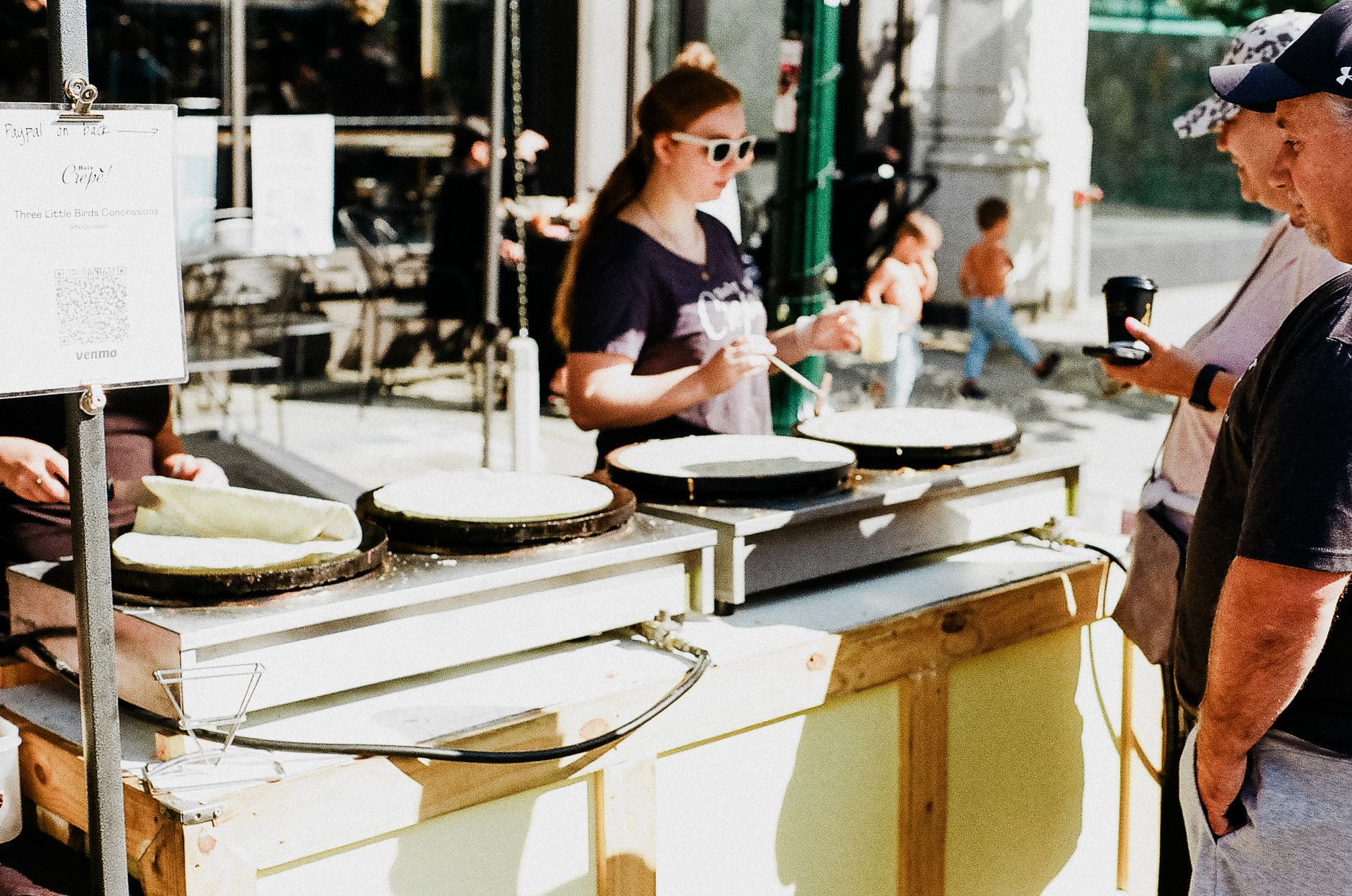

Crêpes parisiennes, the thin, lacy street-food staple of Paris, have made a quietly convincing case for themselves in Pittsburgh over the past few years. These are not the thick American-style pancakes folded over fruit filling at a diner counter. A true Parisian crêpe is almost translucent, cooked fast on a flat steel griddle, folded into a neat cone or triangle, and eaten on the move. Pittsburgh, a city that has always been quicker to adopt good ideas than it gets credit for, now has several spots that take the tradition seriously.
What makes a crêpe parisienne different
The word "Parisian" signals a specific preparation rooted in the street stalls of Montmartre and the Latin Quarter. The batter is simpler than it looks: flour, eggs, milk, butter, and a pinch of salt, rested overnight so the gluten relaxes and the finished crêpe stays supple rather than chewy. The magic is in the pour and the spread, a quick circular motion with a wooden spreader called a rozell, leaving a paper-thin layer that takes only a minute to cook. Sweet versions get the classic combination of salted butter and granulated sugar, or Nutella and sliced banana. Savory galettes, made with buckwheat flour in the Breton tradition, hold ham, Gruyère, and a cracked egg. Some Pittsburgh kitchens blend both traditions under one roof, which is exactly the kind of practical creativity the city tends to reward.
Where to find crêpes parisiennes in Pittsburgh
The Strip District remains the most reliable neighborhood for internationally influenced food, and it is no surprise that a handful of vendors and small cafes have started serving crêpes as a regular menu item rather than a weekend novelty. Weekend mornings at the market bring pop-up crêpe stations that move fast. If you have ever wandered through the Strip District on a Saturday, you already know how quickly a queue forms around anything that smells this good.
Oakland has its own growing crêpe culture, partly driven by the student population around Pitt and Carnegie Mellon, who tend to have a taste for portable, affordable food that does not sacrifice quality. A few cafes near the university district have added crêpes parisiennes to their morning menus, filling them simply with lemon and powdered sugar or, for the savory crowd, spinach and feta. The Porch area draws a lively brunch crowd, and nearby spots have taken notice of the demand. Fans of The Porch Pittsburgh looking for a lighter pre-game or post-walk snack have started finding crêpe options within easy walking distance.
Lawrenceville, the neighborhood that tends to absorb new food trends quickest, has at least two cafes incorporating crêpes into rotating weekend menus. One takes a mostly savory approach, leaning on local ingredients like Clarion River honey and Pennsylvania mushrooms. The other leans sweet and classic, sticking close to the Paris street-stall formula with a focus on good butter and high-fat milk.
The right way to order
If you are new to crêpes parisiennes, the sweet butter-and-sugar version is the place to start. It sounds almost too simple, but the quality of the ingredients and the precision of the cooking make all the difference. A good crêpe should have lacy brown edges, a slightly glossy interior, and enough give to fold without cracking. Ask whether the batter was rested; a kitchen that rests its batter overnight is a kitchen that cares. For savory options, look for galettes made with buckwheat rather than all-purpose flour: buckwheat gives the earthy, slightly nutty base that holds rich fillings without going soggy.
Pairing matters too. A crêpe parisienne eaten alongside a well-pulled espresso is the standard Parisian experience, and more of Pittsburgh's cafes are getting serious about both at the same time. The convergence of the city's improving coffee scene with the crêpe trend is one of the quietly pleasant developments of the past year or two.
A food trend that fits Pittsburgh's character
Pittsburgh has a long habit of adopting European food traditions and making them genuinely its own. The city's Eastern European pierogies, its Italian-influenced Bloomfield bakeries, and its French-leaning restaurant openings in East Liberty all tell the same story: this is a city that takes food seriously without being precious about it. Crêpes parisiennes fit that character well. They are democratic street food with a long history, they work at almost any price point, and they reward the maker who pays attention to basics.
For anyone still deciding whether Pittsburgh is the kind of city where a small, quality-driven food scene can thrive, the crêpe question is a useful test case. The answer, increasingly, is yes. If you are new to the city and still mapping out where to eat, understanding what to expect in your first year living here will help you find these pockets of culinary ambition faster than any single restaurant guide can.
Pittsburgh's crêpe scene is still young enough that the best spots reward a little exploration. Follow local food accounts, ask at the coffee counter, and do not rule out the weekend market stall that looks like it just appeared. In this city, some of the best food comes from exactly that kind of low-key setup.