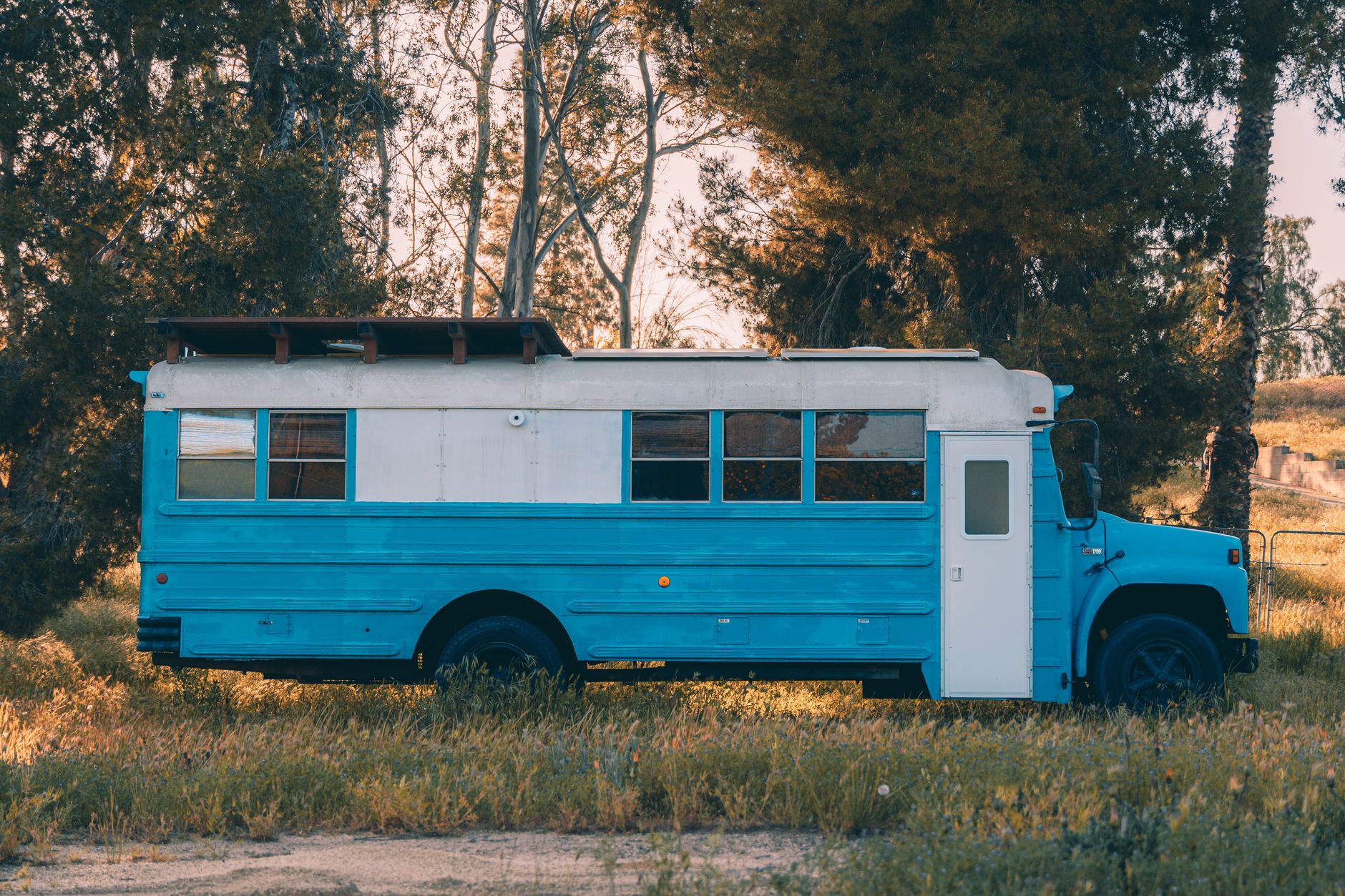

The vintage school bus is having a serious moment. What once sat rusting in a municipal lot is now, in neighborhoods from Hazelwood to the North Side, being stripped, insulated, wired, and turned into something that blurs the line between vehicle and home. Pittsburgh, with its distinct DIY streak and relatively low cost of tinkering, has become one of the more interesting cities in the country to watch this trend unfold.
What draws people to a vintage school bus conversion
The appeal isn't hard to trace. A used diesel school bus can be purchased for as little as $3,000 to $8,000 depending on mileage and condition. That price point puts a livable space within reach of people who have been priced out of conventional housing or who simply want to build something entirely their own. The conversion process itself typically runs another $10,000 to $30,000, depending on how far the builder takes the interior finish.
Pittsburgh fits this picture well. The city's cost of living is low enough that people can afford the time and materials to do the work themselves. Its neighborhoods have long supported maker culture, from the machine shops of the Strip District to the woodworking studios of Lawrenceville. A vintage school bus project is, in many ways, the logical extension of that tradition into mobile living.
What a conversion actually involves
The bones of the project are consistent across most builds. Converters start by pulling out the seats, which are bolted to floor rails and come out relatively quickly. Then comes the rust remediation: any structural rust in the wheel wells or undercarriage gets ground out and treated before a single piece of insulation goes in. That step is non-negotiable in Pittsburgh's climate, where wet winters accelerate corrosion faster than builders in drier climates expect.
Insulation choices split the community. Spray foam is fast and seals every gap, but it's nearly impossible to remove if something goes wrong behind a wall. Rigid foam board takes longer but stays accessible. After insulation, builders run 12-volt electrical systems, often powered by roof-mounted solar panels. Plumbing is minimal by design: a freshwater tank, a pump, a small sink. Some Pittsburgh converters skip a toilet entirely and build near facilities, while others install composting units.
The interior finishes are where the personality comes in. Reclaimed wood from Pittsburgh salvage yards shows up constantly in local builds. Narrow-gauge hardwood flooring, thin-profile cabinetry, and fold-down tables keep the space feeling open in a footprint that might be 170 square feet on a standard 35-foot bus.
Where Pittsburgh builders source their buses
Government auctions are the first stop for most builders. Pennsylvania's online auction system lists retired school buses from districts across the state throughout the year. Allegheny County school districts cycle out older fleets on a regular schedule, which keeps local supply reasonably consistent. Public Surplus, one of the larger government auction platforms, lists Pennsylvania fleet vehicles including buses from school districts statewide.
Private sellers show up on regional Facebook groups, which have become the real marketplace for the skoolie community. A search for "skoolie Pittsburgh" or "school bus conversion Pennsylvania" surfaces active communities where builds are documented in real time, parts are traded, and advice flows freely. The communities tend to be generous with knowledge, partly because the shared learning curve is steep enough that hoarding information helps nobody.
The practical reality of living in one in Pittsburgh
Parking and zoning are the two hard questions. Pittsburgh's zoning code doesn't make a clean accommodation for a vehicle used as a primary residence, which means most bus dwellers either park on private land with a landowner's permission or rotate spots to avoid triggering complaints. A handful of converters have established relationships with farmers in Allegheny County's outer townships, parking on agricultural land in exchange for small payments or work-trade arrangements.
Winter is the other honest consideration. Pittsburgh winters are genuinely cold, with January lows regularly dipping below 20 degrees Fahrenheit. A well-insulated bus with a properly sized propane or diesel heater handles that range without much difficulty, but the build has to be done right. Cheap insulation jobs fail. Condensation builds up behind improperly sealed panels and causes mold problems that are difficult to address in a small space. The local builders who have done it successfully tend to over-insulate rather than cut corners.
On the community side, Pittsburgh's openness to unconventional living helps. The city's neighborhoods on the rise have attracted a demographic that skews toward creative, cost-conscious residents who are already experimenting with how they live and work. A converted school bus parked on a property in Hazelwood or Millvale draws curiosity more often than hostility.
How the movement connects to Pittsburgh's broader housing conversation
Skoolie living doesn't solve a housing crisis on its own. But it's part of a wider conversation happening in Pittsburgh about what affordable, self-determined living can look like. The same instinct driving someone to convert a vintage school bus also drives interest in tiny homes, co-ops, and alternative ownership structures.
Pittsburgh's affordable housing landscape is changing fast enough that people are getting creative, and the school bus community reflects that energy at its most hands-on. These aren't people waiting for a policy solution. They're buying a bus and getting to work.
The Skoolie Magazine has documented dozens of builds from the mid-Atlantic and Northeast, and several Pittsburgh-area converters have been featured. The common thread isn't any single aesthetic. It's the same thing that has always drawn people to build their own space: the conviction that doing it yourself, in your own city, on your own terms, is worth the effort.
Getting started if you're serious
Buy the bus before you buy anything else. Look at the frame, the roof seams, and the floor rails. A sound structure with a tired engine is a better starting point than a clean interior on a rusted frame. Get underneath it. Take it to a diesel mechanic in Hazelwood or the Southside Slopes who will give you a straight read on what the drivetrain needs.
Budget honestly. The $5,000 bus that needs $25,000 in work is still a $30,000 project. That's not a bad number for a fully custom living space, but it isn't free, and the people who run out of money halfway through tend to be the ones who skipped the planning phase. Join the local Facebook groups before you start spending. The advice there, specific to Pittsburgh's climate and available suppliers, is worth more than most of the national guides.