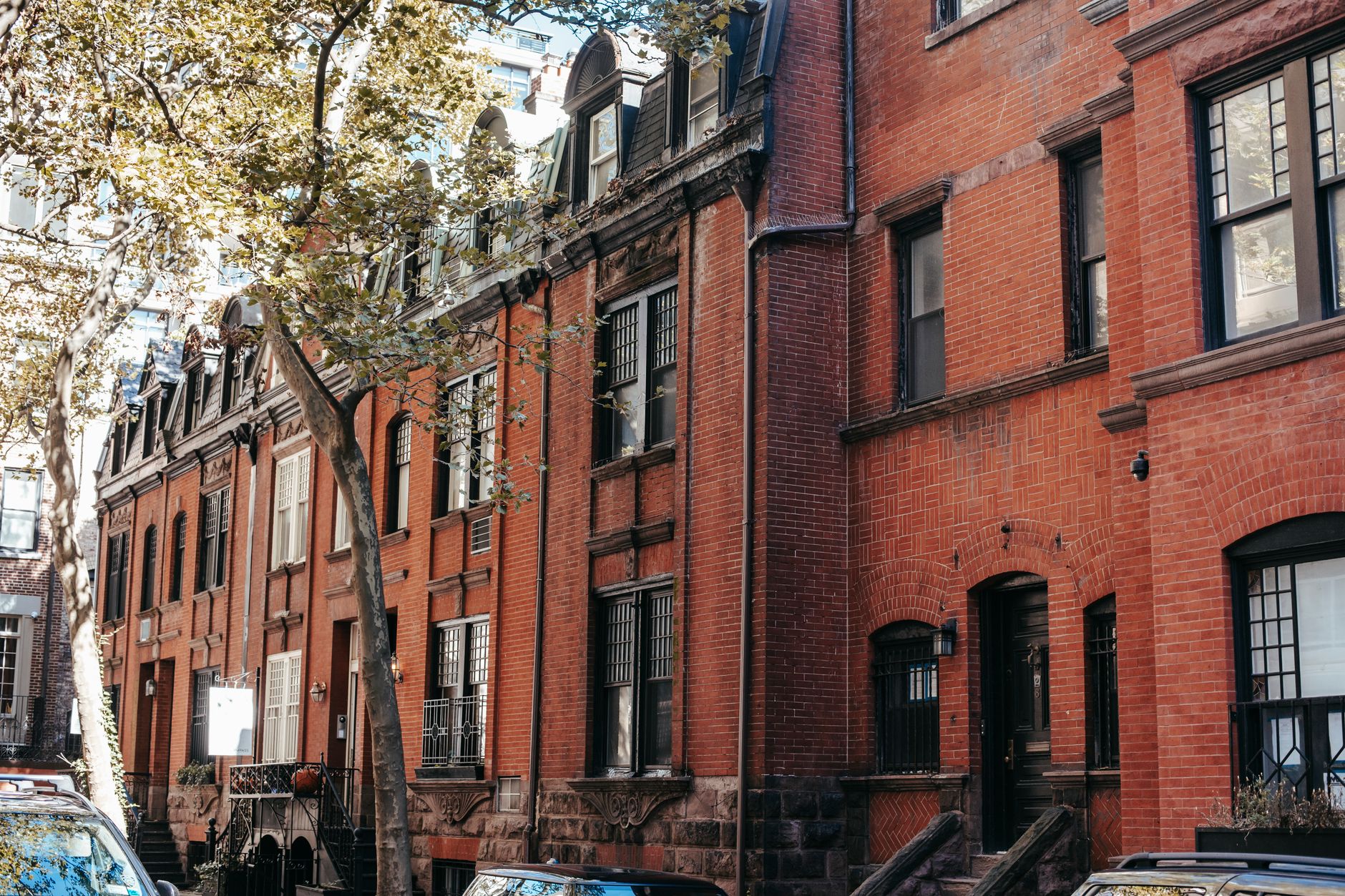

Brookline doesn't show up on many "best neighborhoods" lists. It doesn't have a tech campus or a brewery district or a walkable café strip drawing out-of-towners on weekends. What Brookline has is something rarer in Pittsburgh: a fully functional neighborhood that works quietly, on its own terms, for the people who actually live there. That's worth paying attention to.
Where Brookline sits and why that matters
Brookline occupies a ridge in Pittsburgh's South Hills, roughly two miles south of Downtown and bordered by Beechview to the west, Carrick to the east, and Overbrook to the south. The terrain is classic Pittsburgh: steep drops into hollows, long flat ridgelines that reward the climb. Brookline Boulevard runs the length of the neighborhood and functions as a genuine commercial main street, the kind that has become increasingly rare in mid-size American cities.
Getting Downtown from Brookline is straightforward. The Port Authority's 36 and 38 bus lines run along Brookline Boulevard and connect directly to Downtown Pittsburgh with reliable frequency. For residents making the car-free commute calculation, Brookline clears the bar. It's one of the South Hills neighborhoods where ditching the car isn't a fantasy.
Brookline Boulevard: a main street that actually works
Brookline Boulevard runs about a mile through the heart of the neighborhood, and it has the bones of a great urban commercial street. Independent businesses anchor most of the corridor. You'll find a hardware store, a handful of diners, a barbershop that has occupied the same corner for 40 years, a pharmacy, and a smattering of restaurants and bars that serve the neighborhood rather than performing for it.
The commercial mix isn't curated. There's no aesthetic thread tying the storefronts together. That's part of what makes the boulevard functional rather than merely charming. Residents can run errands on foot. That's increasingly the standard worth measuring any neighborhood main street against, and Brookline passes it. Compare this with Squirrel Hill's Forbes and Murray corridor, which is often cited as Pittsburgh's gold standard for walkable urbanism. Brookline's boulevard isn't quite that polished, but it serves a broader income range, and that's not a small thing.
Housing: what you actually get for your money
Brookline is one of the last Pittsburgh neighborhoods where a working family can buy a well-maintained rowhouse or brick single-family home without stretching to the edge of financial sense. Median home values in Brookline consistently run below the Pittsburgh city average. Two- and three-bedroom homes with yards, parking, and original woodwork appear on the market for well under $200,000. Rentals are similarly reasonable: a two-bedroom apartment on a quiet residential street typically runs $900 to $1,200 per month, depending on condition and features.
That affordability hasn't come at the cost of housing quality. Brookline's stock is predominantly early-to-mid 20th century brick construction, the same era and building type that drives buyers into Squirrel Hill and Shadyside. The difference is that in Brookline, the location premium hasn't arrived yet. Whether it stays that way is an open question. Residents who've watched adjacent neighborhoods change tend to have complicated feelings about that.
Who lives in Brookline
Brookline's population skews toward longtime Pittsburgh families, teachers, city employees, and tradespeople who wanted to own a home without leaving the city limits. It's one of the more racially and economically mixed South Hills neighborhoods, a mix that has held relatively steady for decades. The neighborhood has active civic organizations, a longstanding community council, and a genuine sense that residents show up for each other in the ways that matter: block watches, school fundraisers, church-organized cleanup days.
That civic culture is visible in small ways. Brookline's public spaces get maintained by people who live near them. The neighborhood's parks, including Brookline Memorial Park at the center of the neighborhood, stay clean because people care about them staying clean. It sounds like a low bar. In a city where neighborhoods rise and fall partly on community cohesion, it isn't.
What Brookline doesn't have (yet)
There's no specialty coffee shop pulling in remote workers from across the South Hills. There's no natural wine bar or farm-to-table dinner spot that gets written up in food publications. The restaurant options on Brookline Boulevard are solid and unpretentious. Pittsburgh's craft cocktail scene hasn't made its way down the hill yet. If those things matter to you, Brookline will feel like it's missing something.
The trade-off is real. Neighborhoods with those amenities cost more to live in, often significantly more. Brookline's current moment is the moment that Lawrenceville was in roughly 15 years ago, before the boutique shops arrived: livable, locally rooted, and still priced for the people who've always been there.
Schools and families
Brookline sits within Pittsburgh Public Schools' Zone 6, and local children are zoned to Brookline Elementary and then Pittsburgh Brashear High School. Brashear is one of Pittsburgh's larger comprehensive high schools and offers a range of vocational and academic pathways. The school question is always part of the calculation for families considering a move, and Pittsburgh's district boundaries have quirks worth understanding before you commit to a zip code. A closer look at how Pittsburgh's school districts actually work is useful context for anyone making the Brookline decision.
The neighborhood also benefits from proximity to several Catholic schools in the South Hills, which gives families an additional set of options within a reasonable driving distance.
The bottom line on Brookline
Brookline rewards a different kind of buyer than the neighborhoods that get more attention. It's not a destination neighborhood. It's a place where people build lives, and where the infrastructure for that, the main street, the transit, the housing stock, the civic culture, holds together in ways that more fashionable Pittsburgh neighborhoods sometimes don't. The South Hills have a reputation for being the boring side of the city. Brookline is the counterargument: unglamorous, functional, and genuinely livable in the ways that end up mattering most.