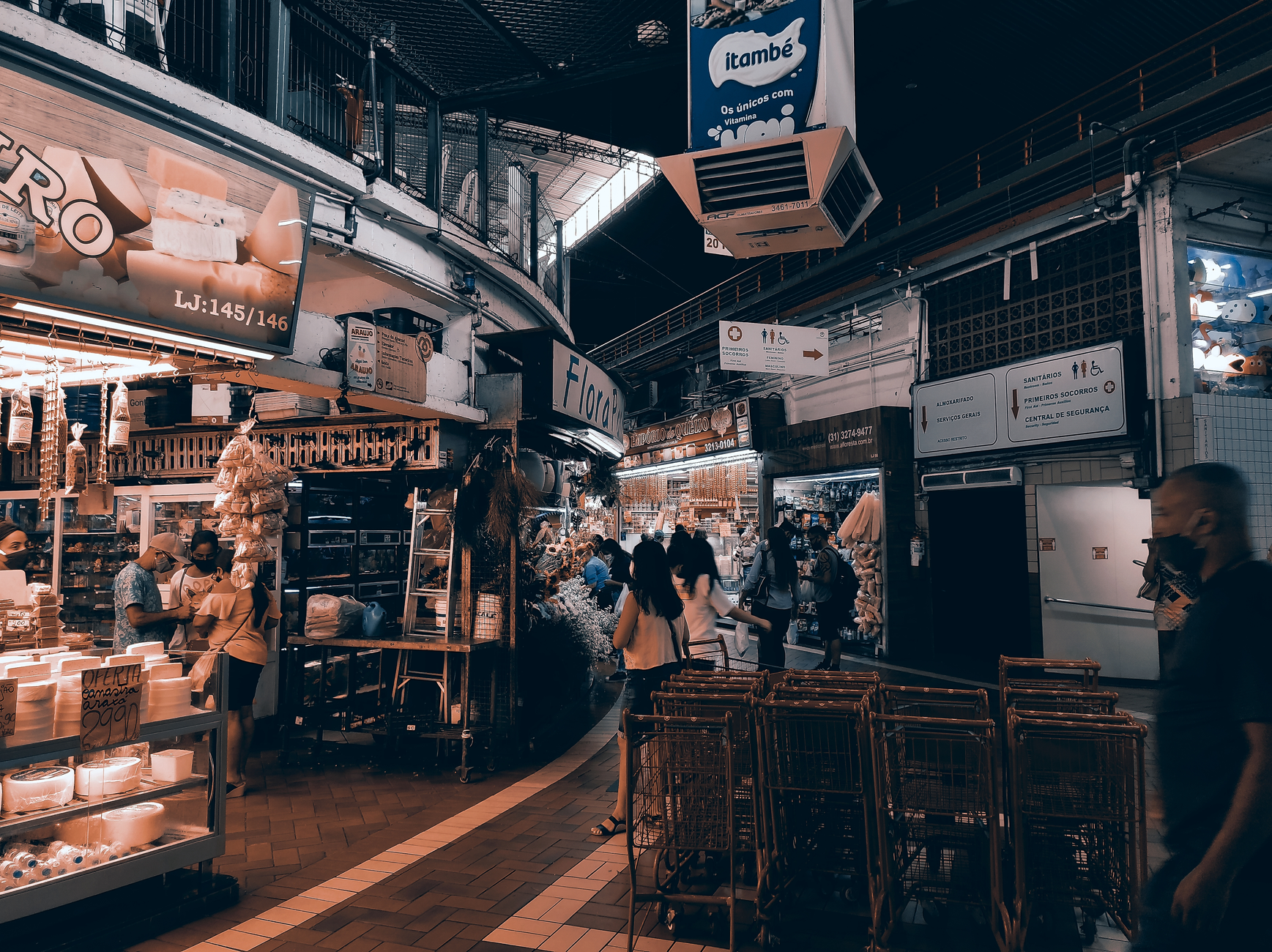

Food halls have reshaped eating out in Pittsburgh's East End over the past several years, turning former industrial and commercial spaces into shared kitchens, vendor markets, and dining rooms where a group can split four cuisines in a single visit. They aren't the same thing as food courts. The best ones curate their vendors carefully, maintain a real sense of place, and build foot traffic that benefits every stall inside. Pittsburgh now has enough of them that it's worth knowing which ones deliver on that promise and which feel more like real estate plays with food attached.
Smallman Galley: the one that started the model
Smallman Galley in the Strip District is the prototype for Pittsburgh's incubator-style food hall. It gave early-stage restaurant concepts short-term residencies, letting chefs test menus and build audiences before committing to a full brick-and-mortar. Several Pittsburgh restaurant names that locals now take for granted got their first real run inside Smallman Galley's walls. The model attracted attention nationally and directly influenced how the city thinks about restaurant development. The Strip District location closed in 2019, but its influence on the concept remains visible in what came after it. A second iteration, the Galley, opened in the East End and continues the incubator format with rotating vendors and a shared bar program.
Bakery Square and the anchor tenant approach
Bakery Square, the redeveloped former Nabisco factory complex in Larimer, isn't a food hall in the pure sense, but it functions as one for much of the neighborhood. The complex clusters independent food vendors alongside Google's Pittsburgh offices and a mix of retail. The food options here skew toward lunch-driven traffic: counter-service spots, café operators, and grab-and-go concepts that serve the building's tech workers and nearby residents. It's less curated than a true food hall and more practical, but for anyone working or living in the East Liberty and Larimer corridor, it's a daily anchor. East Liberty's transit-oriented redevelopment has pushed foot traffic toward Bakery Square from multiple directions, and the food options have followed that growth.
The Porch at Schenley and Oakland's gathering model
Oakland runs on a different kind of food hall energy. The Porch at Schenley isn't a vendor market, but it captures something similar: a large, shared, indoor-outdoor space with multiple food and drink programs under one roof. The draw here is the setting. The Porch sits adjacent to Schenley Park, pulls students from Carnegie Mellon and Pitt, and operates more like a community hub than a restaurant. The food is a secondary reason to visit for many regulars. That's both a strength and a limitation.
Sienna Sulla Piazza and the upscale end of the spectrum
Not every East End food destination positions itself as casual or democratic. Sienna Sulla Piazza in Shadyside takes the European-market idea seriously, combining a wine bar, an artisan food shop, and a café into a space that feels more like a specialty grocer with seating than a food hall in the conventional sense. It's quieter, more curated, and aimed at a different customer than the incubator-style halls. The price points reflect that. If you're looking for a focused wine-and-cheese experience rather than a multi-vendor lunch, this is where the East End goes.
What makes a food hall actually work in Pittsburgh
The difference between a food hall that builds a neighborhood identity and one that fizzles inside 18 months comes down to a few concrete things. Anchor vendors matter. A single well-known operator can pull enough foot traffic to sustain five smaller stalls. Location relative to transit matters just as much. Pittsburgh's East End has benefited from the 61C and 61D bus lines threading through neighborhoods like Squirrel Hill, Shadyside, and East Liberty, making these spaces reachable without a car. And the shared bar model, where vendors split the cost of a liquor license and a common seating area, tends to produce better outcomes than spaces where each stall operates in isolation.
The incubator version of the food hall serves a second purpose that the city doesn't always advertise. It gives chefs from immigrant communities, first-time operators, and cooks without capital access to commercial kitchen infrastructure they couldn't otherwise afford. That's a real civic function. Pittsburgh's Vietnamese, Lao, and Ethiopian food scenes have all benefited from lower-barrier entry points into the restaurant market, and food halls are one mechanism that makes that possible. For anyone interested in how Pittsburgh's immigrant-founded restaurant operators build their businesses, the food hall model is part of the story.
What to expect when you visit
Most East End food halls share a few operational traits. Weekday lunch hours draw the heaviest crowds, especially near office clusters. Weekend evenings are often better for exploring, with vendors more likely to be running their full menus and the shared bar more active. Cash is less useful than it used to be; most stalls run on card-only systems now. And parking is almost never easy. The East End is dense, and food halls tend to land in the walkable core of it. Coming by bus or on foot is usually faster than circling for a spot.
Pittsburgh's food hall scene is not finished developing. The neighborhoods feeding into the East End are still adding density, and the appetite for shared dining spaces has held up better here than in cities where the format briefly peaked and collapsed. The best of what exists now rewards a visit on its own terms, not as a substitute for a proper restaurant but as something different: a place to eat well, try something unfamiliar, and stay longer than you planned.