
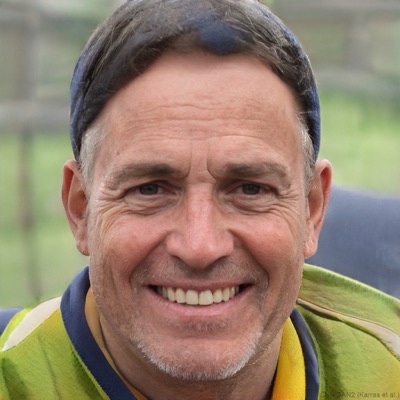
Natalye Paquin didn't set out to run an arts organization. She set out to solve a problem she kept seeing from the inside: Pittsburgh's cultural institutions drew consistent, passionate audiences, but those audiences rarely reflected the full city. The people who needed arts access most were usually the last ones invited in. Paquin decided to do something about it.
Who Natalye Paquin is and what she built
Paquin served as president and CEO of Points of Light, the national volunteer and civic engagement nonprofit, before returning her focus to Pittsburgh's local ecosystem. Her career has threaded through nonprofit leadership, civic strategy, and community development, but her most lasting Pittsburgh work centers on reimagining how arts organizations relate to the neighborhoods around them.
She's one of a small group of civic founders in the city who operate at the intersection of arts, equity, and institutional reform. Paquin's argument isn't complicated. Arts institutions built in the twentieth century were designed around a particular kind of patron: educated, economically comfortable, and mostly white. That design still shapes most of those institutions today, not because anyone decided to keep it that way, but because nobody decided to change it.
Changing it, she has said in public forums, requires more than a free community night or a discounted ticket program. It requires restructuring what organizations value, who they hire, what stories they tell, and which neighborhoods they physically show up in.
The model she developed
Paquin helped develop a programming framework that pushes arts organizations off their campuses and into neighborhoods like the Hill District, Hazelwood, and Homewood, areas that have historically produced extraordinary cultural output while receiving almost none of the institutional investment. The approach treats community partnerships not as outreach add-ons, but as core organizational strategy.
Pittsburgh's geography matters here. The city's hills and distinct neighborhood identities, which you can read more about in our look at Pittsburgh's neighborhoods by elevation, mean that institutional footprints in Oakland or the Cultural District don't automatically serve the East End or the South Side. Getting arts programming to where people actually live requires deliberate logistics, not just goodwill.
Paquin's model builds those logistics in from the start. Partner organizations in target neighborhoods help co-design the programming. Local artists, not visiting presenters, anchor the work. And funding structures are built to sustain the effort over years rather than treating it as a pilot that gets cut in the next budget cycle.
What makes her approach different
Pittsburgh has no shortage of well-meaning arts access initiatives. Most of them fail quietly because they're designed from the top down. An institution decides it wants to serve a neighborhood, applies for a grant, runs a program for a year, celebrates the attendance numbers, and then moves on. The neighborhood gets nothing lasting.
Paquin's work is explicitly designed to leave infrastructure behind. That means trained local arts administrators, not just artists. It means physical spaces that a neighborhood organization can use after the visiting program ends. And it means documentation that other Pittsburgh institutions can actually replicate.
Pittsburgh Cares, which has spent years connecting neighbors to service and volunteer opportunities across the city, operates on a similar principle: civic infrastructure only works if the community builds and owns it. Paquin applies that logic directly to arts access.
Why Pittsburgh is the right city for this
Pittsburgh is an unusual place to try this kind of work, in both good and hard ways. The city has serious institutional arts infrastructure: the Carnegie Museums, the Pittsburgh Symphony Orchestra, the Pittsburgh Cultural Trust, and dozens of smaller presenting organizations. That means there's real capacity to redirect. An arts access movement in a city with no institutional base is a different and harder problem.
At the same time, Pittsburgh's neighborhood fragmentation, its economic history, and its racial geography create access gaps that are unusually stark. A family in Homewood and a family in Squirrel Hill may live three miles apart and have completely different relationships with the city's cultural life. Paquin has pointed to that contrast as the core motivation for her work.
She's also been direct about the funding challenge. Most arts access work in Pittsburgh is philanthropically supported, which means it's always competing with other priorities and always vulnerable to donor preference shifts. Building earned revenue and community ownership into the model is her answer to that fragility.
What Pittsburgh's arts scene should expect next
Paquin's influence on Pittsburgh's arts and civic landscape has grown steadily, even if her name doesn't always attach to the programs it shapes. Institutional leaders across the city have cited her framework as a reference point for their own community engagement work. Several of Pittsburgh's mid-size presenting organizations are currently running programs that trace a direct line back to conversations she helped start.
Her next move is likely to deepen the network of neighborhood arts administrators her model has helped train, and to push Pittsburgh's larger institutions toward longer-term, co-designed community partnerships rather than season-long engagement experiments. The city's arts scene has the talent and the infrastructure. Paquin's bet is that it also has the will.