
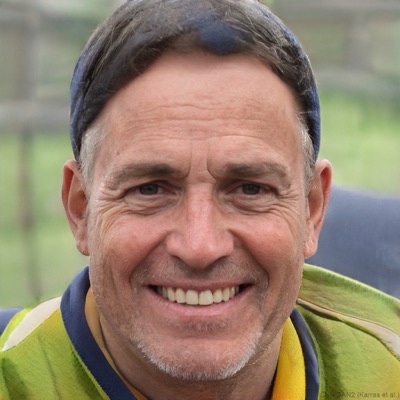
Colleen Cruz didn't set out to become a real estate operator. She was a screen printer running out of a borrowed corner in a friend's studio in Garfield, scrambling every few months to hold onto a foothold that was never really hers. What changed her direction wasn't a business plan. It was a row of empty storefronts on a block she walked past every day, and the obvious mismatch between what those spaces sat empty doing and what the people around her needed.
Cruz founded Open Mill Collective in 2019, a Pittsburgh-based organization that leases vacant commercial properties and converts them into shared production studios for craftspeople, small-batch manufacturers, and independent artists. Open Mill now manages four locations across Garfield, Lawrenceville, and the lower Strip District, with a combined membership of over 60 active makers. Its spaces run kilns, laser cutters, dye vats, letterpress equipment, and commercial-grade sewing machines, depending on the building.
The problem she was solving
The vacancy rate on Pittsburgh's secondary commercial corridors has hovered persistently above 15 percent for years, particularly in blocks that sit just off the main drags drawing retail investment. Cruz recognized that these properties weren't unattractive because of the city. They were unattractive to conventional tenants because of their square footage, their loading configurations, or their physical condition. For a maker, those same features were exactly right.
Cruz negotiated her first lease in 2019 with a landlord on Coral Street who had held an empty 3,800-square-foot space for 18 months with no takers. She paid below market rent in exchange for handling buildout and bringing consistent foot traffic. Within four months, she had 11 members paying monthly bench fees. The landlord renewed, then reduced the rent further, because the occupancy held steady through a period when the broader retail market did not.
The model wasn't charity. It was a straightforward proposition: Cruz takes on the hard work of tenant recruitment, buildout management, and community-building; the landlord gets a tenant who stays, pays, and activates the block. Pittsburgh's progressive urban real estate scene has explored versions of this thinking from the development side, but Cruz came at it from the practitioner side, which shaped how her spaces actually run.
What Open Mill actually does
Membership at an Open Mill location costs between $180 and $420 a month, depending on the space tier and equipment access. That covers 24-hour keycard entry, shared tool maintenance, and what Cruz calls "production adjacency," meaning members get to work next to other people doing serious, physical, skilled work. It's not a co-working cafe. The floors are concrete. There are ventilation hoods and fire suppression systems. People are actually making things.
Cruz built the equipment inventory through a combination of donated machines, surplus from shuttered facilities, and a small revolving loan fund seeded by Pittsburgh-area foundations. The Carnegie Mellon Entertainment Technology Center connected her to a cohort of designers whose prototyping needs fit naturally into the Open Mill environment, bringing in a second wave of members who used the spaces differently from the original craftspeople.
By 2023, Open Mill had a waiting list. Cruz responded not by raising prices, but by finding two more spaces. One is a former upholstery shop in the lower Strip District with original industrial windows and a freight elevator. The other is a narrow double-storefront in Garfield that Cruz calls the "textile wing," where members focus primarily on fiber arts, natural dyeing, and small-run apparel production.
Garfield as proving ground
Cruz chose Garfield for her first location deliberately. The neighborhood sits directly above Bloomfield and East Liberty and has long had more creative residents than it has visible infrastructure for them. What Open Mill added to Garfield wasn't just workspace. It added a gathering point.
Members from the Garfield location have gone on to secure vendor spots at weekend markets, launch an online shop that shipped to 31 states in its first year, and, in one case, sign a wholesale contract with a Philadelphia-based retailer. Cruz doesn't take a commission on any of it. She tracks outcomes because the foundation funders who helped build the equipment loan program ask for them, but she's clear that the organization's job ends at the studio door.
Garfield itself has been changing. New residential development along Penn Avenue and investment in the commercial strip have sharpened attention on the neighborhood in ways that bring both opportunity and displacement pressure. Cruz is watching the rent market carefully. She renegotiates leases on two-year cycles, and she's added a first-right-of-refusal clause to her newest agreements. She's not naive about what rising property interest can do to a model built on below-market access.
What comes next
Cruz is currently in conversation with the City of Pittsburgh's Urban Redevelopment Authority about a fifth location, this one in Uptown. The neighborhood has been the subject of sustained planning attention for years, with a mix of housing proposals and corridor investment that has moved slowly. A maker space in Uptown would be the first of its kind in the corridor and would put Open Mill within walking distance of the Hill District.
She's also developing what she calls a "mobile anchor" program: a converted step van equipped with a portable heat press, vinyl cutter, and basic screen printing setup that she plans to park at community events and school sites, connecting younger Pittsburghers to production skills before they need a studio membership. The van is in conversion now. Cruz expects it on the road by early 2027.
Open Mill isn't the biggest story in Pittsburgh's maker economy. Cruz would probably say that's fine. The 60-plus members working in her spaces every week don't need the organization to be big. They need it to keep the lights on, the kilns running, and the leases signed.