Uptown sits on a narrow ridge between Downtown Pittsburgh and the Hill District, and for most of the past 50 years it functioned primarily as a pass-through. Residents drove through it. Bus riders crossed it. Developers looked past it. That pattern is shifting now, and the change is more deliberate than the kind of organic momentum that reshapes a neighborhood like Lawrenceville or East Liberty. Uptown's redevelopment is driven by planning documents, transit investment, and a handful of anchoring institutions that have decided this corridor is worth building around.
What Uptown actually is
Uptown occupies roughly a half-mile stretch of Fifth and Forbes avenues between the edge of Downtown and the base of the Hill. It's not a neighborhood most Pittsburghers could outline on a map. It lacks a commercial main street, a signature park, or the kind of visible identity that gives places like Friendship or Regent Square their character. What it does have is location. The corridor connects Oakland's medical and university campuses to the central business district, making it one of the most strategically positioned underdeveloped strips in the city.
The neighborhood's housing stock is thin. Vacant lots are common. A few longstanding institutions, including a handful of social service organizations and churches, have held on through decades when disinvestment was the prevailing condition. Those anchors matter now because they give any redevelopment plan a social fabric to build from rather than a blank slate to fill.
The transit piece
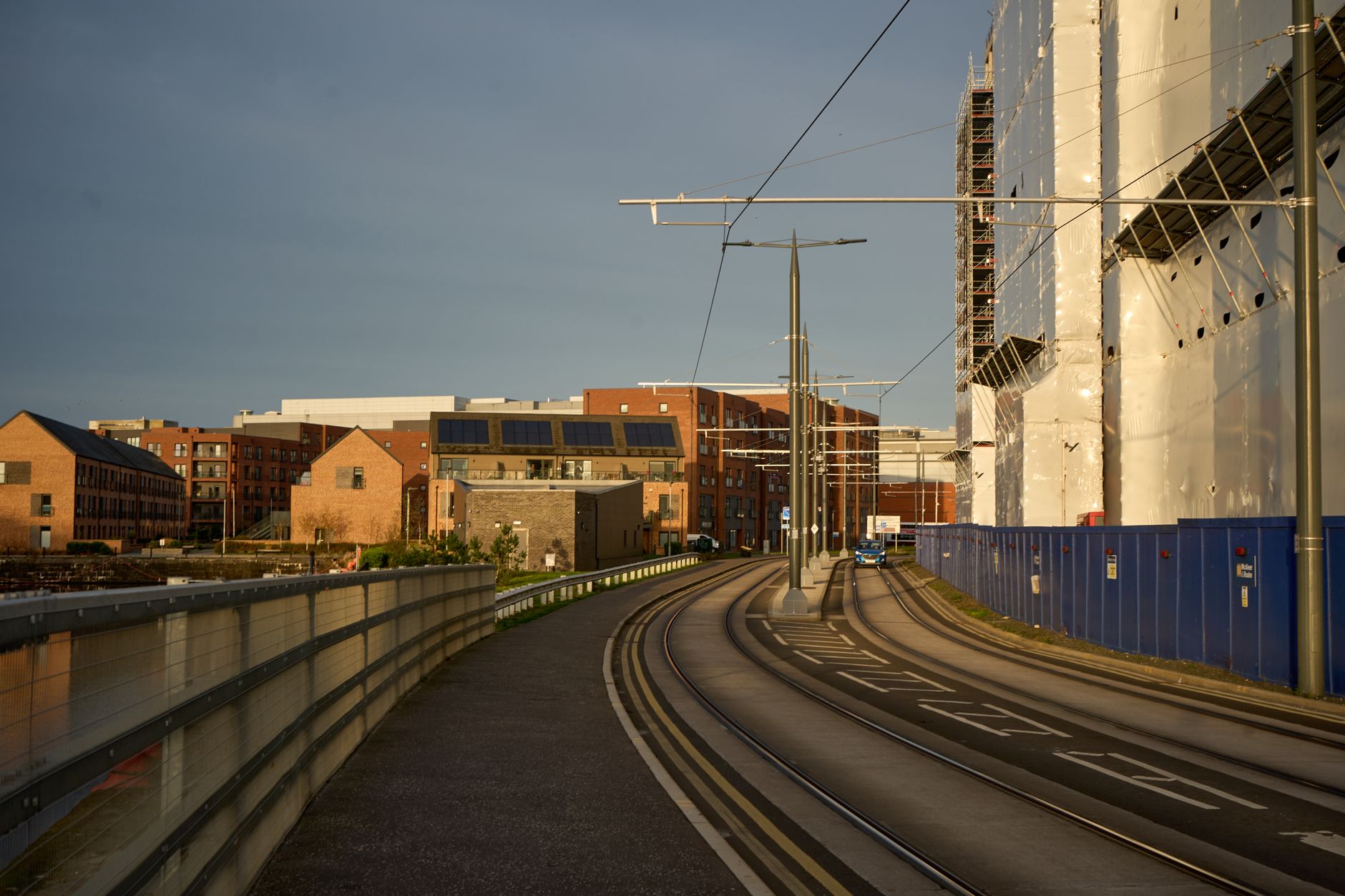
The practical centerpiece of Uptown's redevelopment is a Bus Rapid Transit line connecting Downtown to Oakland. Pittsburgh Regional Transit has worked for years on the BRT project, which runs directly through the Uptown corridor. BRT is not the same thing as a paint stripe and a new schedule. Done properly, it brings dedicated lanes, signal priority, improved stations, and the kind of transit reliability that developers treat as a real amenity when they're deciding where to put buildings.
The Pittsburgh pattern here is familiar. When East Liberty rebuilt itself around its busway stops, the transit infrastructure was the scaffolding everything else attached to. Uptown's BRT corridor is meant to work the same way: give the neighborhood legible transit identity, and the adjacent development decisions become easier to make.
What's being built and by whom
The Uptown Partners of Pittsburgh, a neighborhood development organization, has been the primary planning voice for the corridor for over a decade. Uptown Partners has pushed for affordable housing preservation alongside new market-rate development, a balance that's genuinely difficult to achieve when land near a major transit line starts attracting outside interest.
The Uptown EcoInnovation District plan layers an environmental and sustainability agenda on top of the transit and housing priorities. The idea is to recruit businesses and institutions in clean energy, environmental services, and related fields to locate in the corridor, creating an employment cluster that reinforces the residential base. It's an ambitious frame, and whether the tenant mix materializes at the intended scale remains an open question.
Chatham University, which sits just up the ridge in Shadyside, has a presence in the conversation. UPMC, whose Oakland campuses are the largest employer in the corridor's catchment area, has been a background actor in the planning process. Neither institution has committed to anchor development in Uptown itself, but both generate the foot traffic and employee base that make the corridor's commercial potential legible.
The affordable housing question
Uptown is not a neighborhood where longtime residents are being displaced at scale, because there aren't many longtime residents left. The housing that was there was largely demolished or abandoned across the urban renewal era. That history shapes the current debate in an important way: the question isn't only how to prevent displacement but how to ensure that new housing built in the corridor serves a mix of incomes rather than defaulting to market-rate units for workers commuting between Oakland and Downtown.
Pittsburgh's broader housing policy conversation has been wrestling with missing-middle forms, the duplexes and rowhouses and small apartment buildings that don't fit neatly into either the single-family or large-tower categories. Uptown, with its narrow lots and urban density, is actually a reasonable candidate for exactly that kind of housing. The corridor's parcel map makes it possible to build at a human scale without requiring the kind of large assembled sites that make development in tighter neighborhoods so difficult.
What the corridor still lacks
Retail is the most visible gap. Fifth and Forbes through Uptown have some auto-oriented businesses, a few longtime food spots, and a lot of empty storefronts. A transit-oriented corridor works best when ground-floor commercial space activates the street between stations, and right now Uptown doesn't have that. Attracting retail to a corridor that still feels transitional is a chicken-and-egg problem: merchants want foot traffic, and foot traffic follows established destinations.
Lighting, sidewalk condition, and basic streetscape quality remain issues along parts of the corridor. These are solvable problems. They're also the kind of problems that persist for years when the funding pipeline for capital improvements moves slowly, which in Pittsburgh it often does.
The Hill District's own redevelopment trajectory matters here too. The Hill sits directly above Uptown, and the relationship between the two corridors will shape how both develop. A thriving Hill creates spillover energy for Uptown. A Hill District that continues to see investment concentrated in a few parcels while the broader neighborhood waits leaves Uptown more isolated than its geography suggests it should be.
Why this corridor matters beyond its size
Uptown is small. But corridors like this one, connecting anchor institutions to a city center, are often where cities either demonstrate or fail to demonstrate what their planning values actually are. Pittsburgh has the institutional weight of UPMC, Carnegie Mellon, and the University of Pittsburgh sitting within a mile of this corridor. It has a transit investment moving through it. It has a neighborhood development organization that's been patient and persistent.
The outcome won't be determined by any single project. It'll be shaped by whether the affordable housing commitments hold as land values rise, whether the BRT builds the ridership and street life its designers intend, and whether the EcoInnovation District concept attracts tenants beyond the planning documents. Pittsburgh has pulled off harder transformations. The Hazelwood Green site is evidence of that. Uptown's challenge is different in scale but similar in structure: patience, coordination, and a willingness to make decisions now for outcomes that arrive a decade later.